
In 2015, after completing my Fine Art MA at Winchester School of Art, I joined South East Hampshire Community Outlook, known as SEHCO, as Activities Coordinator on its Step Forward project.
SEHCO was founded by residents of a housing association, with Simon Barnett, one of its founders, serving as chair of the board when I joined. That history mattered. The organisation began from a recognition that people living in housing association communities should have a say in what was available to them and how it developed. They were responsible for running several community centres throughout the South East of Hampshire.
Step Forward was funded by the Big Lottery ‘Reaching Communities’, from 2015 until March 2020. Its work extended across Portsmouth, Gosport, Fareham and Havant, in neighbourhoods shaped by very different histories and resources. My role was not based in one building or attached to one fixed programme. I worked across the wider area, developing activity, relationships and partnerships with young people, residents, voluntary organisations, artists, colleges and local services.
It was the first time I encountered the Indices of Multiple Deprivation as a practical part of planning work. The maps made visible patterns that were already felt locally: uneven access to transport, youth provision, green space, cultural activity, education, work and ordinary routes into wider social life.
But an index is not a place, and a place is not a diagnosis. It can identify unequal conditions and support an argument for investment, but it cannot tell you what people want, what they already have, or what forms of participation might become meaningful. Those questions still had to be asked in relationship.
That was one of the things I valued about the role. The work was not simply to deliver an activity in an area deemed to need one. It was to find out what was already happening, who was already trusted, what people were interested in, and what might become possible if connections, practical support and some resource were brought together.
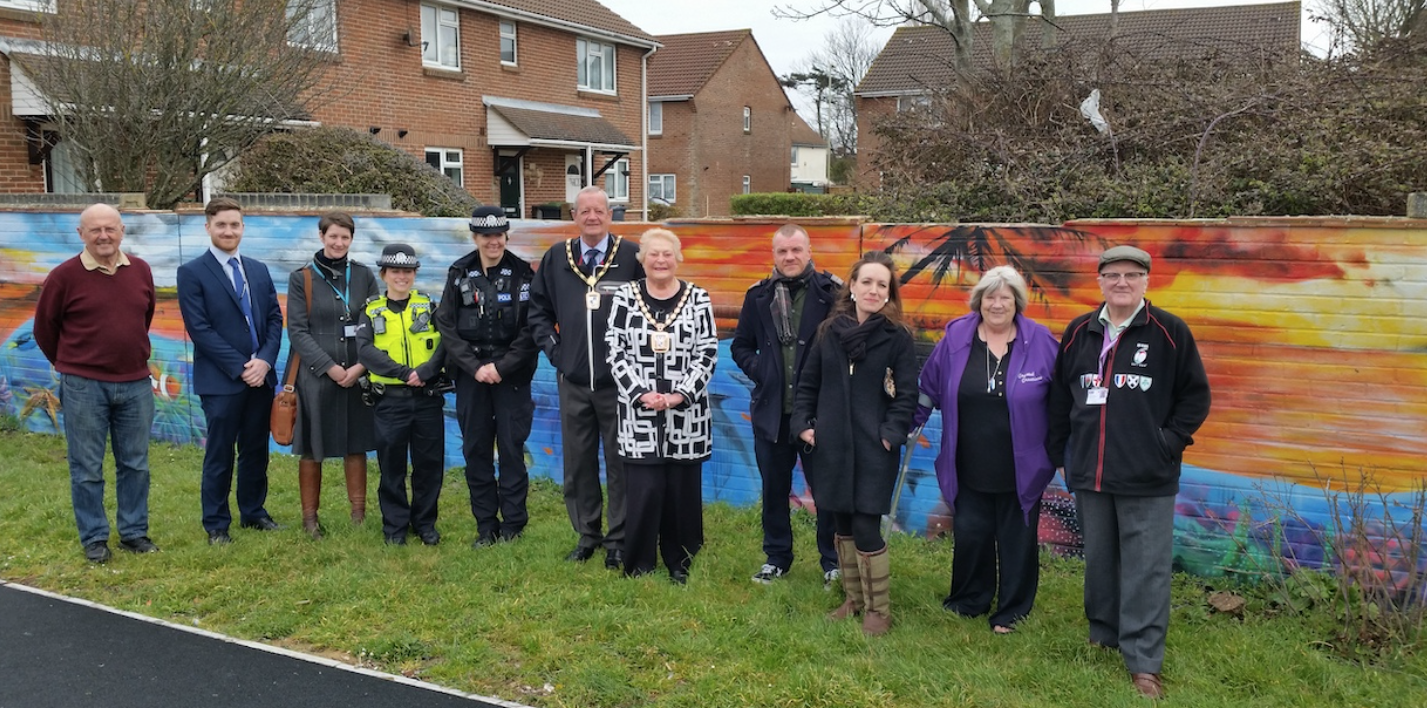
Across the project, I worked alongside and developed activity with organisations including Motiv8, Highbury College, Solent Mind, The Little Art Haven, Pompey in the Community, Gosport Youth Council, MPower and Music Fusion. The work ranged across creative projects, youth participation, music, sport, mental health, education and local communications. I also contributed to projects including the Mengham mural, work with the Hip Hop Shakespeare Company and STOMP.
The list matters less than the method. No single organisation could be the whole answer. A good partnership was not one in which everyone simply appeared on the same leaflet. It was one that gave young people and residents a genuine route into something they could continue to use, make, shape or return to beyond the event itself.
This meant thinking about the practical terms of participation. Could someone get there? Was it free? Did it require confidence, equipment, transport, a particular way of speaking or previous experience? Did it offer a real role, or only the chance to attend? Was there any relationship or opportunity left once the funded session ended?
An example of how I was working: At a meeting of professionals working across Gosport and Fareham, a teacher described a change she believed she was seeing in the ways some young people communicated. She spoke of “short stabby remarks” and “phone text type speaking” rather than longer, more meaningful sentences, and wondered what this might mean for their ability to relate to one another. The observation did not give me a diagnosis to accept. It gave me a question. I have long been interested in language, words and the ways people use them to make identity and connection. Rather than treating young people’s language as something to correct, I began looking for a project that could make language a material for play, performance and expression. I found the Hip Hop Shakespeare Company and invited them to deliver workshops in schools and youth centres. Their approach brought together lyric writing, performance and poetic reinterpretation, drawing out the cultural, social and linguistic connections between hip hop and Shakespeare. It offered a route into literature, music and the arts while giving young people space to develop and present their own ideas.
This role brought me back into relational work after art school, but it did not turn art into a service tool. I could bring visual thinking, a feel for making things visible and an interest in culture into the work, while remaining attentive to the difference between my own art practice and creative activity undertaken with others. The point was not to make people into artists, or to use them as evidence that a project had happened. It was to help create conditions in which people could encounter interests, relationships and possibilities that had room to become their own.
Over time, the work also sharpened my understanding of how limited the word “activity” can be. An activity might be a workshop, a performance, a mural or a weekly session. It could also be the reason somebody first enters a building, meets a person they trust, finds a route into education, discovers a skill or sees themselves differently. The visible event was often only the surface of a longer process.
By March 2020, the project had reached its planned end and the onset of Covid made continuation funding difficult. Its legacy for me was not a belief that partnership work automatically produces participation. It was a clearer sense that participation depends on whether people have a credible way in, some influence over what happens, and a place in which interest can be sustained.
One later development of this work was Unit 3 in Fareham. That story needs its own post because it concerns what changed when a broader network of activity gained a sustained physical space.
Earlier practice informing YAW · Portsmouth, Gosport, Fareham and Havant · 2015 to 2020.
This post documents work undertaken before YAW was established, but which informs its present thinking and practice.
 YAW
YAW 