
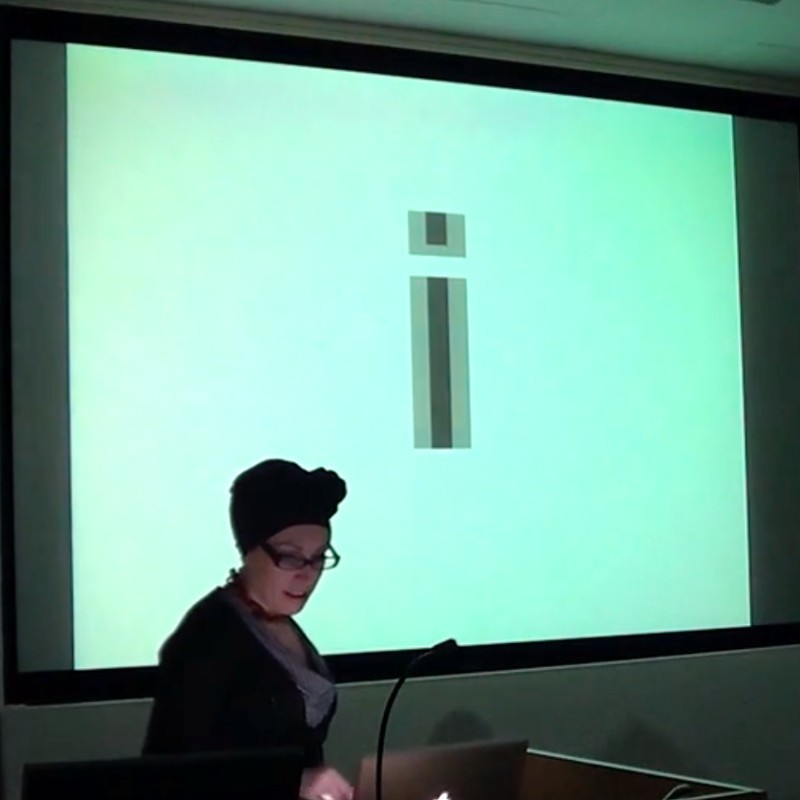
The next part of my history can look neater on paper than it was. I left Southampton City Youth Service on maternity leave in 2005, completed an Art and Design Foundation at Eastleigh College from 2007 to 2008, then went on to a Fine Art BA and MA at Winchester School of Art, leaving in 2014.
That sequence can suggest that youth work led me to art, or that art began when I entered higher education. Neither is true.
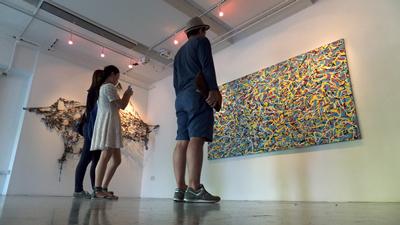
I had been making work long before art school: writing poems, rhymes, stories and diaries; altering text until it became private and visual; collecting flyers; recording and decorating tapes; moving through electro, hip hop and rave culture into style writing. In 1998 I made an abstract painting series called BeatLineZ: a way of moving from writing into mark making, through a loose automatism that I later learned to control without losing its energy. It is still a line of practice I return to now. A later development of this work is documented in the University of Southampton article, The Natural Grew at the Winchester Gallery.
At sixteen, I had attempted college while living independently and dealing with housing instability, without a family support network behind me. I left after six months. From 1998 to 1999, I completed an Advanced GNVQ in Art and Design while living in temporary circumstances. Formal education had gaps; making did not.
By the time I entered the youth service, I was already an artist making my own work. I taught myself Photoshop, worked with photography and design, edited Hype magazine and contributed creatively to youth service projects and local murals. Those projects were collective forms of cultural work. They were not a prelude to my becoming an artist, and they did not make youth work and art the same thing.
That distinction matters. Youth work carried responsibilities to young people, colleagues, project aims and the institution. My own art practice had a different pace, freedom and set of concerns. Visual thinking, language, curiosity and an attention to detail travelled between the two practices. Ownership did not. Collective work belongs to the young people, colleagues, artists and designers who made it possible, not to one person retrospectively claiming it as material.
When I returned to education, motherhood had changed the practical conditions of my life. The Foundation at Eastleigh was not a test of whether I wanted to pursue art; it was a route into education that I could sustain. The BA and MA at Winchester gave the existing practice time, critique and a critical context. They allowed me to follow an idea without having to make it a service outcome, a piece of publicity or proof that an activity had happened.
They also made visible something I had already encountered: access is not the same as participation. Getting through the door of an institution is only the beginning. Time, money, childcare, prior educational experience, confidence and familiarity with institutional language all affect whose work can be developed, understood and taken seriously once they are inside.
At Winchester, as a mature student, I began to recognise that some students had arrived through a more continuous and familiar route into education than I had. I began to understand more clearly how uneven the conditions of participation could be. That recognition became important to my later interest in access and participation. It is not enough to offer someone a place while leaving the practical and cultural terms of belonging untouched.
My own early BA assessments were poor. I had to learn how to make work that an institution could read without allowing its criteria to become the whole account of the work. By the third year, I graduated with a 2:1. On the MA, once I had found a more assured way of working within that frame, I achieved some of the highest marks on the course and left with a distinction.
I do not tell that as a redemption story. It is evidence of the work involved in translating an existing practice into a system with its own conventions, criteria and language. Art school gave my practice time and context; it did not give me ownership of it. I never needed to learn that my art was mine.
That experience informs how I think about institutions more generally. A system can be inflexible, unfair or badly designed, and a person is not wrong to feel its limits. But when someone needs something from it, the next question is how it is built: what has to be worked with, what can be negotiated, what can be challenged, and where there is room to manoeuvre.
This is not an argument for compliance. It is about learning the frame well enough to find the freedom within it, sometimes through compromise, but without giving yourself away.
I see related questions in youth work. Services, targets, forms and professional language make young people legible in particular ways. They can open routes, but they can also reduce someone to a risk, a diagnosis, a problem or an outcome. Part of relational practice is helping someone work out what they need to do to progress, what can be negotiated, and where an institution’s categories are not the full account of who they are.
I knew I could do youth work well, but I also knew that ‘youth worker’ was not the whole answer to who I wanted to become. I did not want to encourage other people to take their ambitions seriously while treating my own creative life as disposable.
That is why I keep a boundary. My art is not a delivery tool, and youth work is not material for my art. Creativity in a service can be valuable, accountable and collective; it is simply a different mode of practice. YAW is a place to trace what has informed both strands without collapsing either one into the other.
Earlier practice informing YAW · Southampton, Eastleigh and Winchester · 1998 to 2014.
This post documents work undertaken before YAW was established, but which informs its present thinking and practice.
 YAW
YAW 