
By the time I became editor of Hype Magazine, I was already interested in how it could become more connected to the young people it was meant to represent.
I didn’t want it to be a magazine produced from an office and then distributed to young people as a finished thing. I wanted more ways for young people to get into it.
There was a break after Issue 11 while I redesigned the magazine. Issue 12, published in Spring 2004, was the first edition following that redesign.
Looking back through it now, I can see the beginning of a shift. There was still a fairly conventional magazine structure, with pieces on politics, GM crops, cannabis law, bullying, young offenders, health, football and popular culture. But there were also more attempts to ask young people directly what they thought.
The opening pages asked readers what they thought of Hype and included a dedicated Hype mobile number, which I made sure went out across the city, so young people could text us directly with ideas, comments and feedback. There were vox pops about GCSEs and a two-page spread asking what made Southampton a good place for young people, and what could be done to make it better.
Issue 12 also included a text competition to guess how many sweets were in a jar, alongside an invitation to become a Hype member. We then kept in touch with members and young people who had taken part through an email newsletter. These were fairly simple mechanisms, but they gave us more ways to maintain contact rather than treating participation as a one-off contribution and were part of trying to change the relationship between the magazine and its readers.
After Issue 12 there was another break. This time it was not primarily about design. We were gathering feedback and looking at how young people could become more involved.
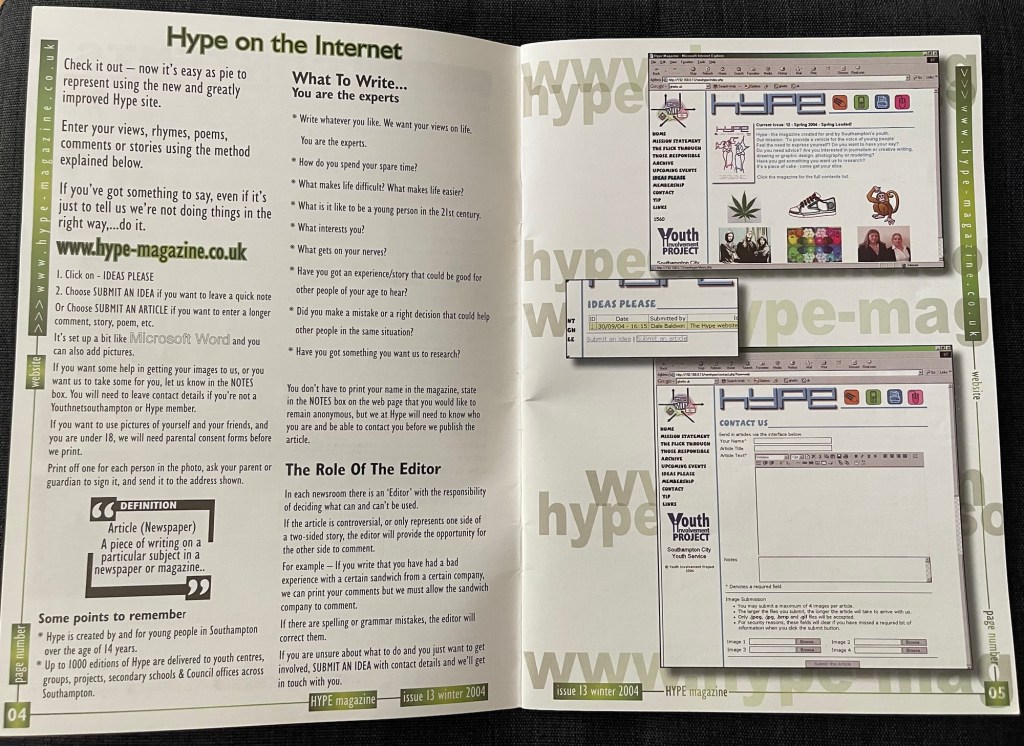
One of the things I pushed for was getting Hype out across the youth centres more consistently. I also made a page on Youthnet where young people could submit ideas for the magazine. I wanted the route into Hype to be more obvious, rather than relying on young people somehow knowing who to contact or already being connected to the right people.
By Issue 13, Winter 2004, that shift is much easier to see.
There are pages from Newtown Youth Club, Swaythling Youth Club and Millbrook Youth Club. There are vox pops about sex and sexual activity, young people’s responses alongside information from the Youth Offending Team, letters and creative writing, an interview with the Youth MP, and a Youth View piece on “ghettoisation”.
There is also a page called What to Write… and The Role of the Editor.
Looking at that now, I think the role of editor had already started to become something broader for me. Editing increasingly meant leaving the office.
It meant going to where young people already were, asking what they wanted to contribute, finding ways for them to take part and then making space for that material within the publication.
The overlap with Beyond Graffiti is probably the clearest example.
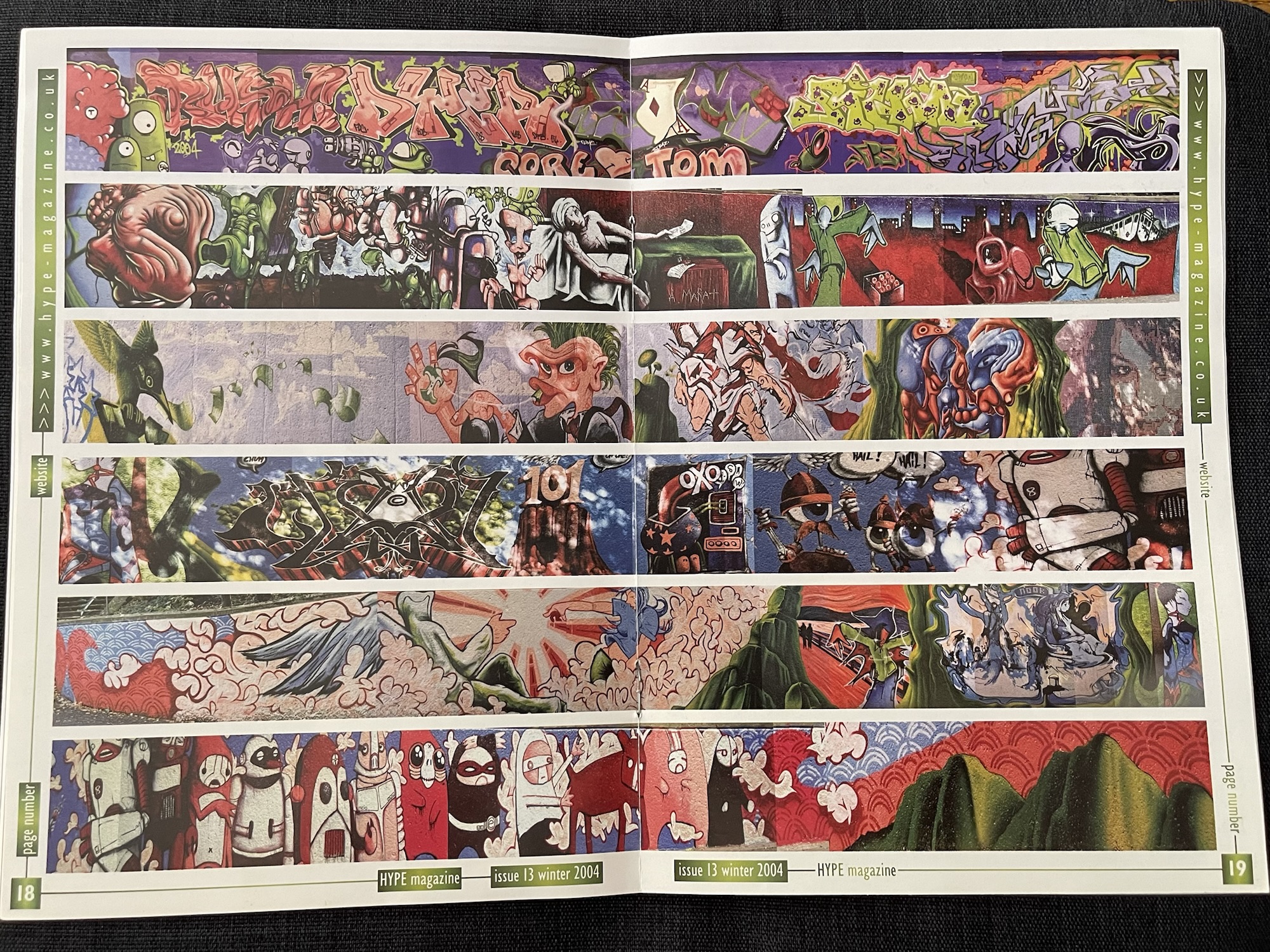
Issue 13 includes a vox pop asking: Why do people spraypaint? Art or vandalism? This is followed by Beyond Graffiti Hit the Common Subway and then a spread of the resulting artwork.
At the time I wouldn’t have separated these things into different kinds of practice. Beyond Graffiti, Hype, Youthnet and the youth centres were all part of the same youth-service environment. Something happening in one place could move into another. A conversation could become a piece of work, the work could become a magazine spread, and the magazine could take that discussion back out across the city.
That circulation feels important to me now.
There were other, quieter examples too.
I gave No Limits space at the back of Hype for an agony-aunt section. No Limits already had the expertise and relationships to respond properly to the kinds of problems young people might write in about, so it made sense to connect the magazine to an existing service rather than try to reproduce that support ourselves.
I also gave space to Connexions for their youth group, and attended the group while supporting them to produce their promotional material.
Again, the work didn’t stop at placing something on a page.
What interests me now is how naturally these roles overlapped. I was editing a magazine, but I was also doing youth work. I was designing pages, but I was also building routes into participation. I was making decisions about layout and language while also thinking about who had access, whose voice was being heard, and how somebody could move from being a reader to becoming a contributor.
There was still editorial control. I was choosing, shaping and arranging material, and that comes with its own questions about power and representation. I don’t want to retrospectively make Hype sound more participatory than it was.
But I can see that I was beginning to question the idea of the editor as the person who simply decides what goes in.
The more interesting role was creating the conditions for more people to enter.
When I look back at Issues 12 and 13 now, that is what stands out most. Not any single article, but the movement outward: towards Youthnet, towards the youth centres, towards other projects, towards specialist services, and increasingly towards material made or initiated by young people themselves.
I wouldn’t have called any of this YAW at the time.
But I recognise the method.
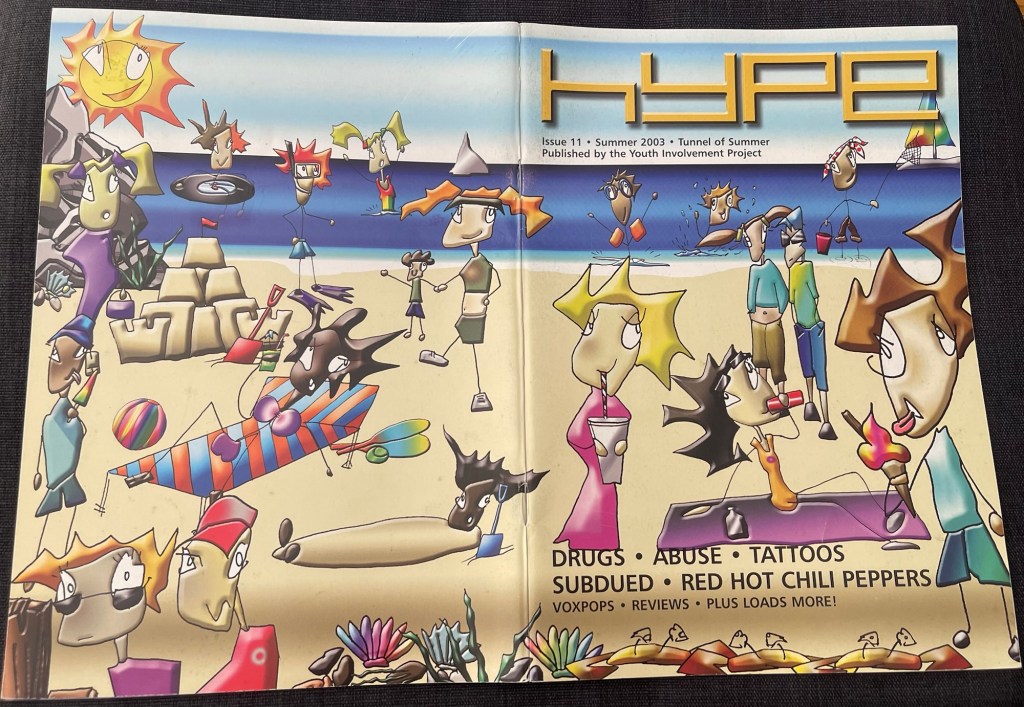
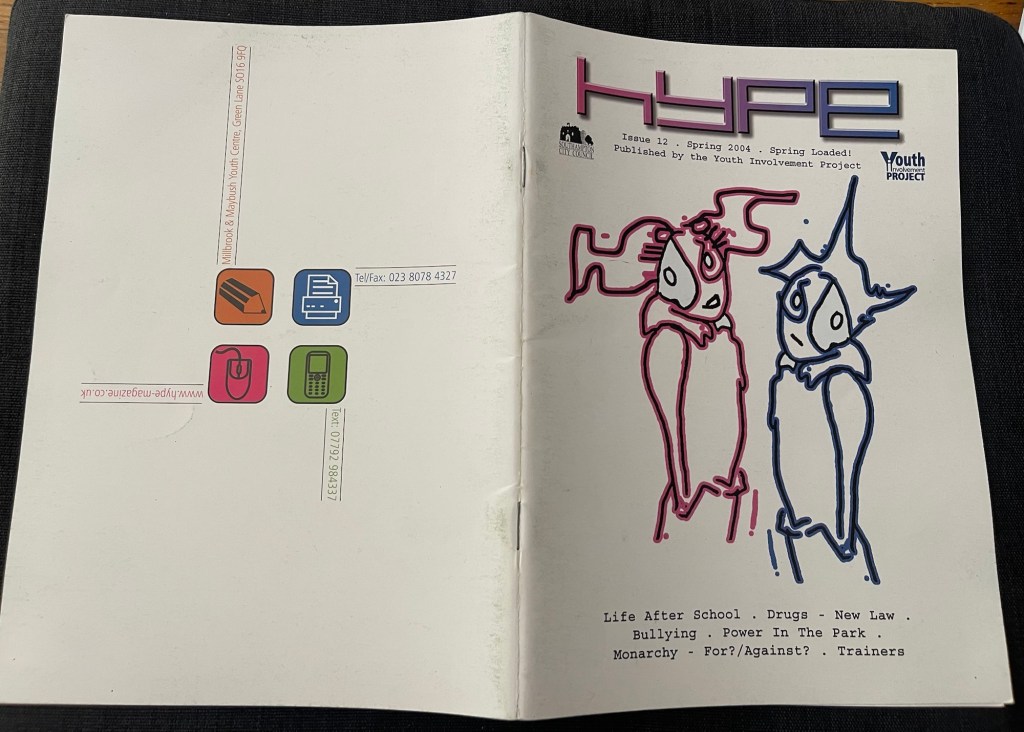
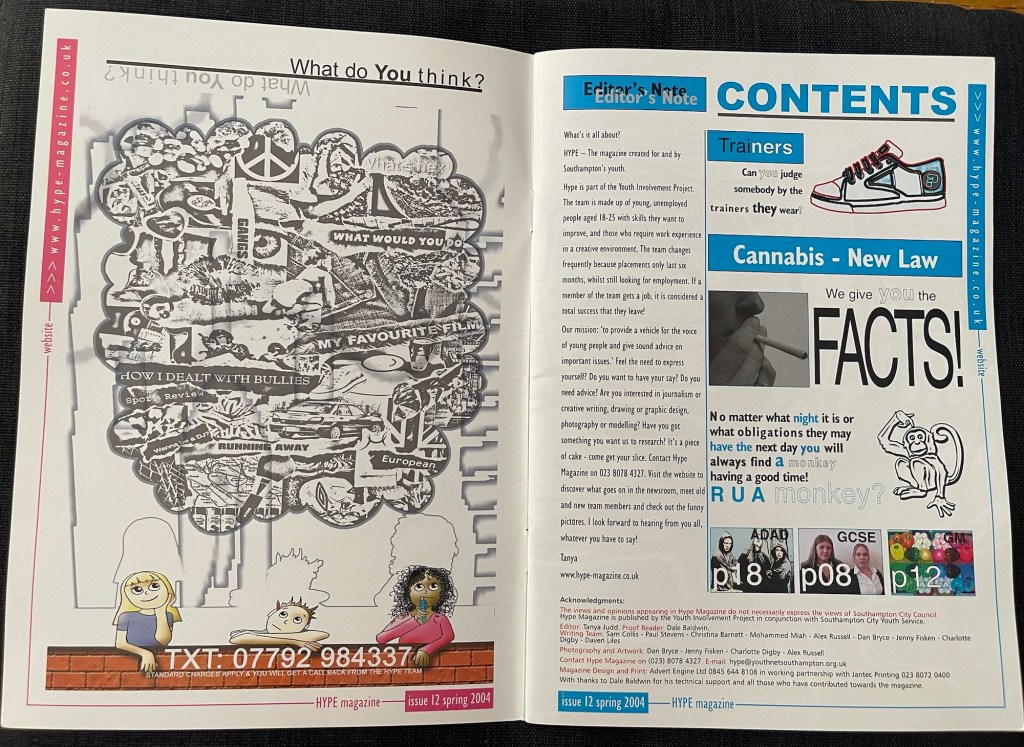
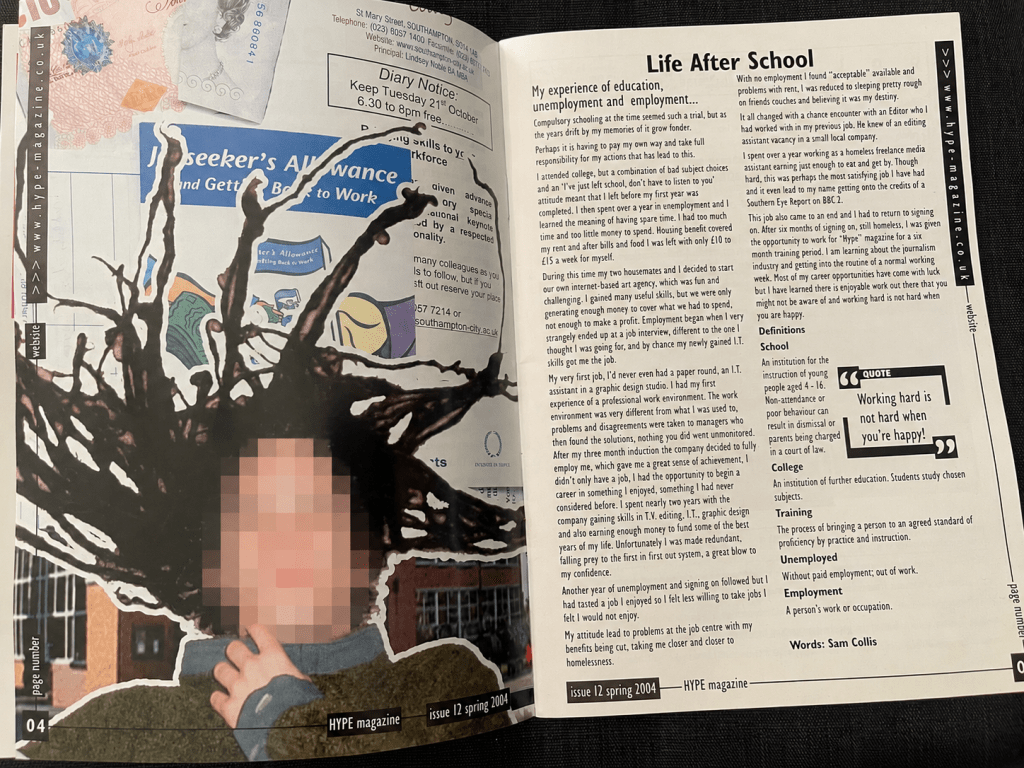
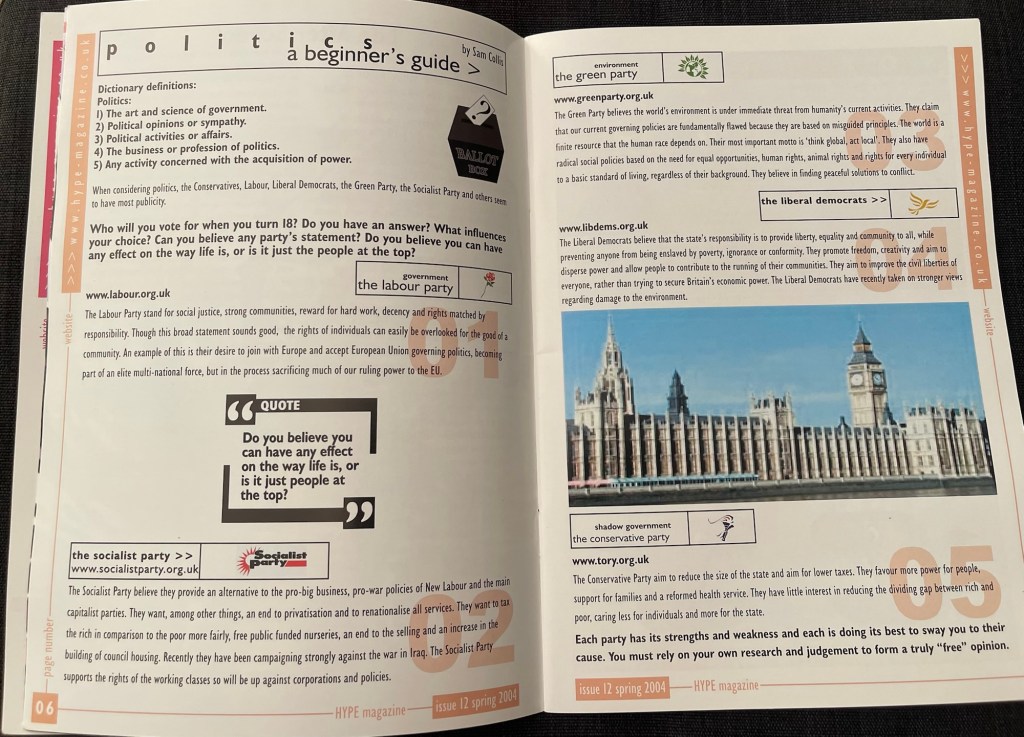
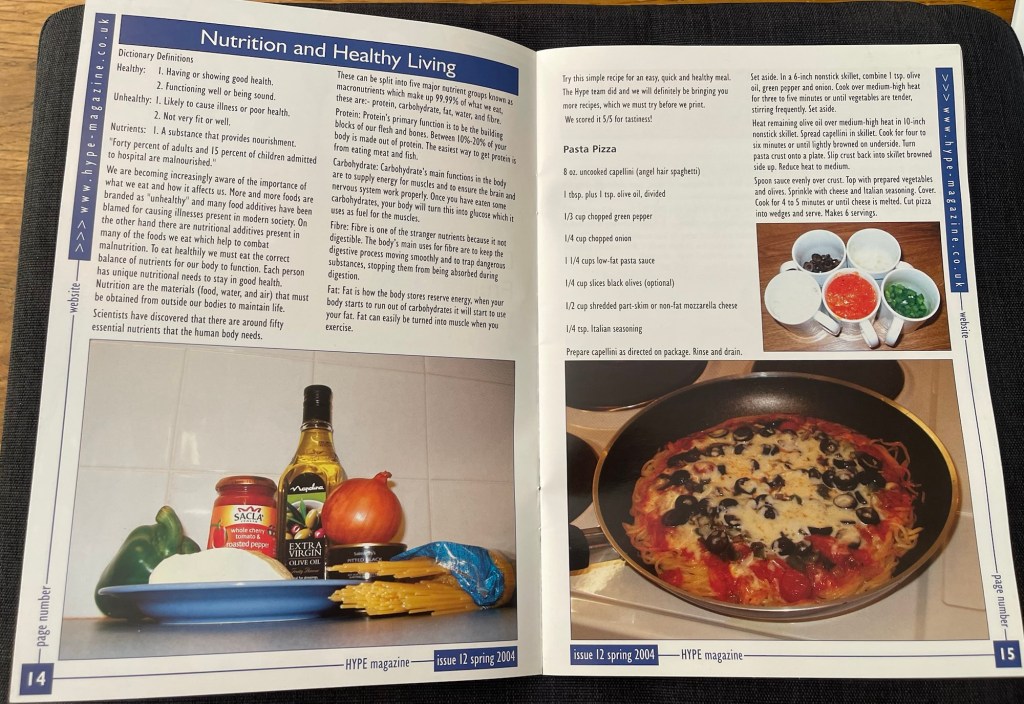
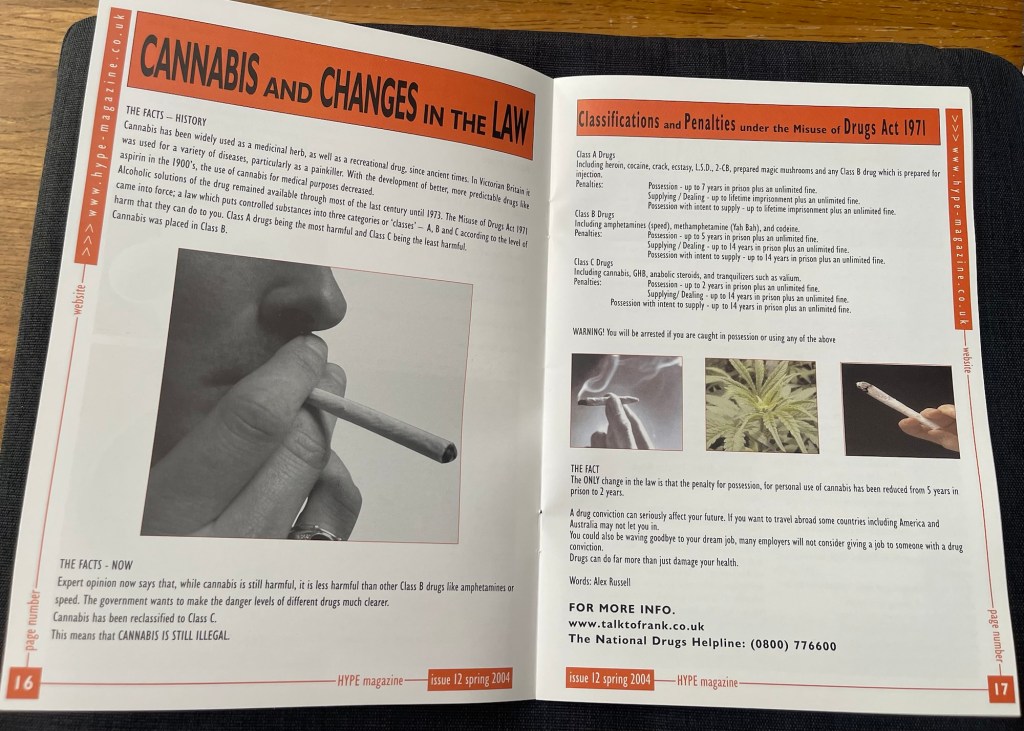
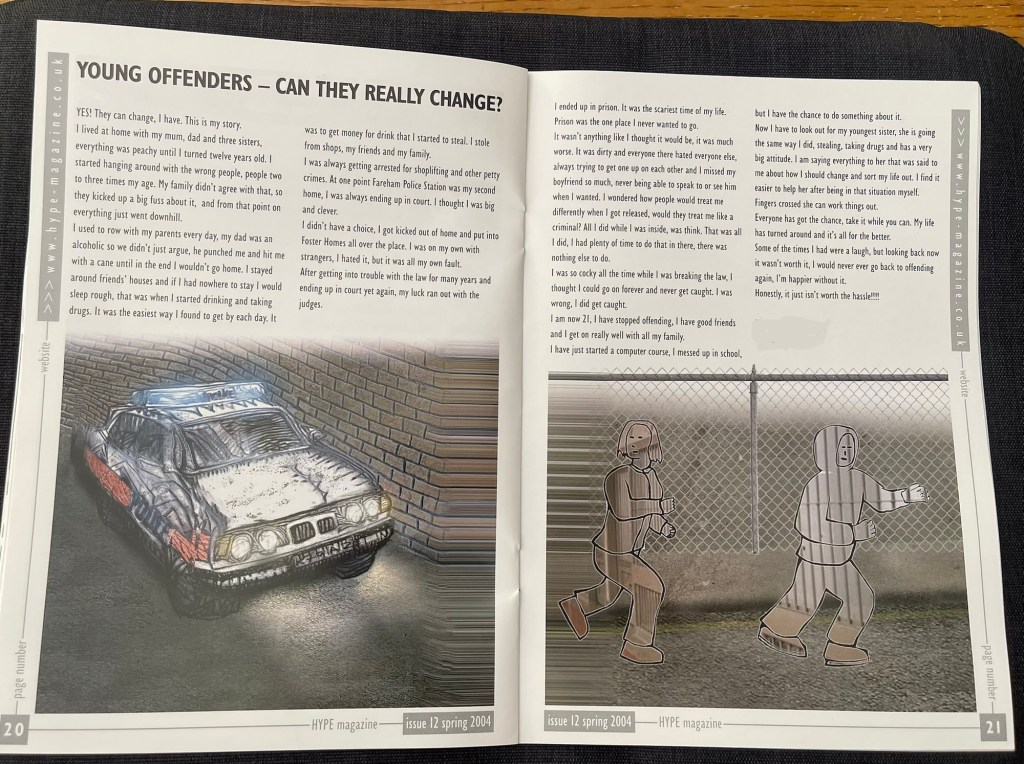
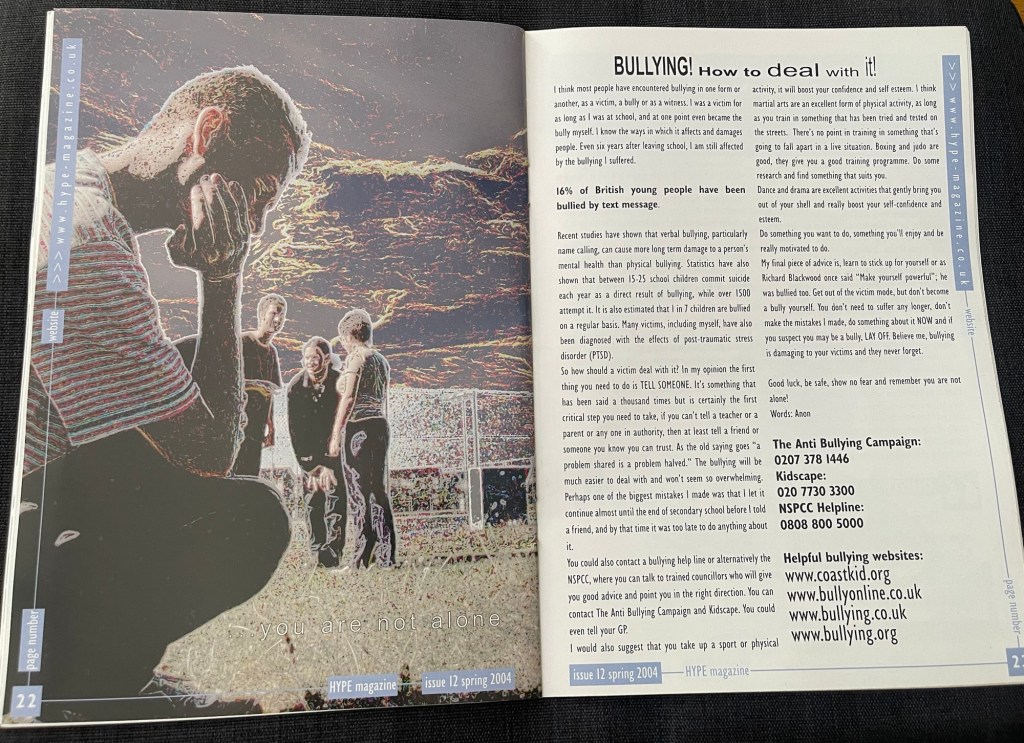
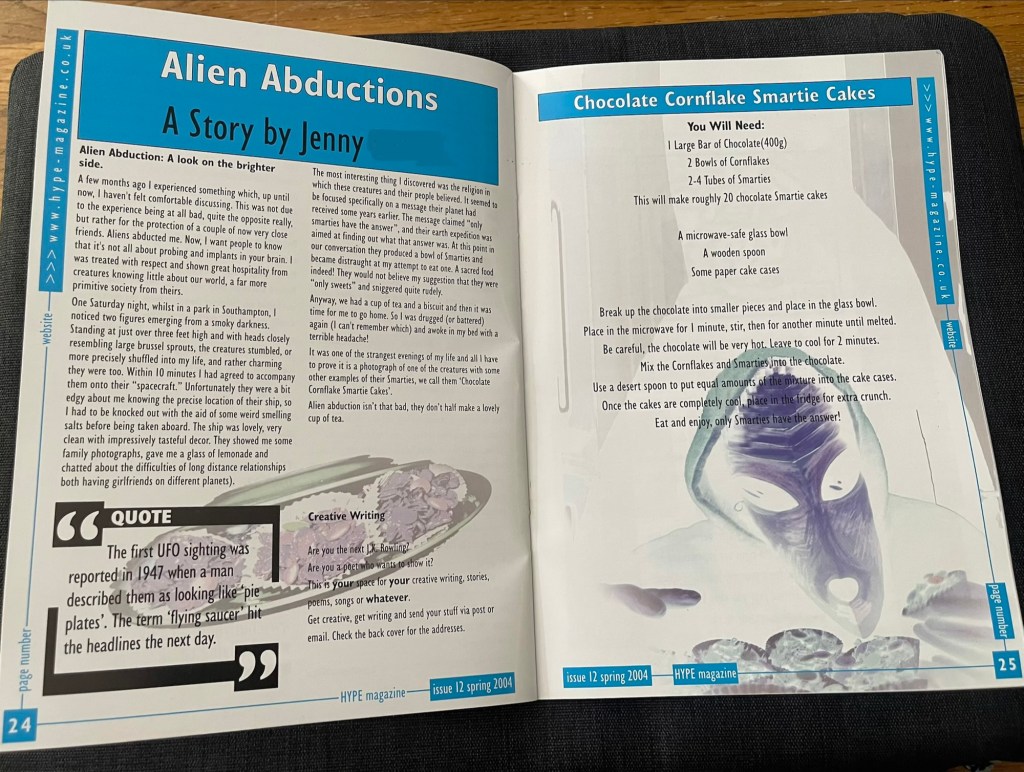
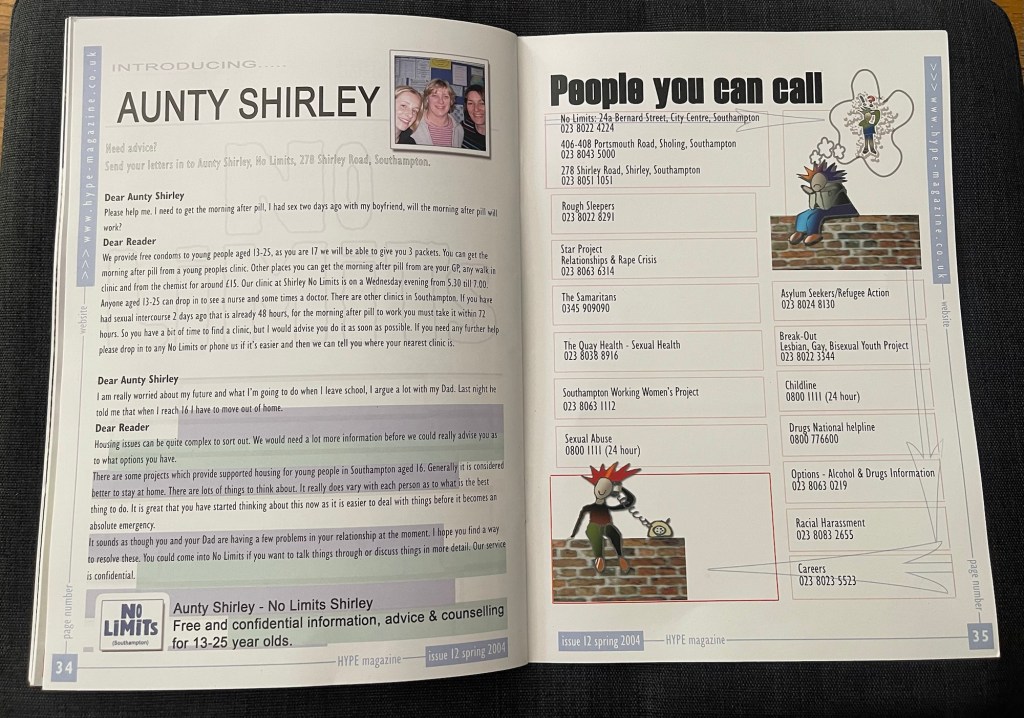
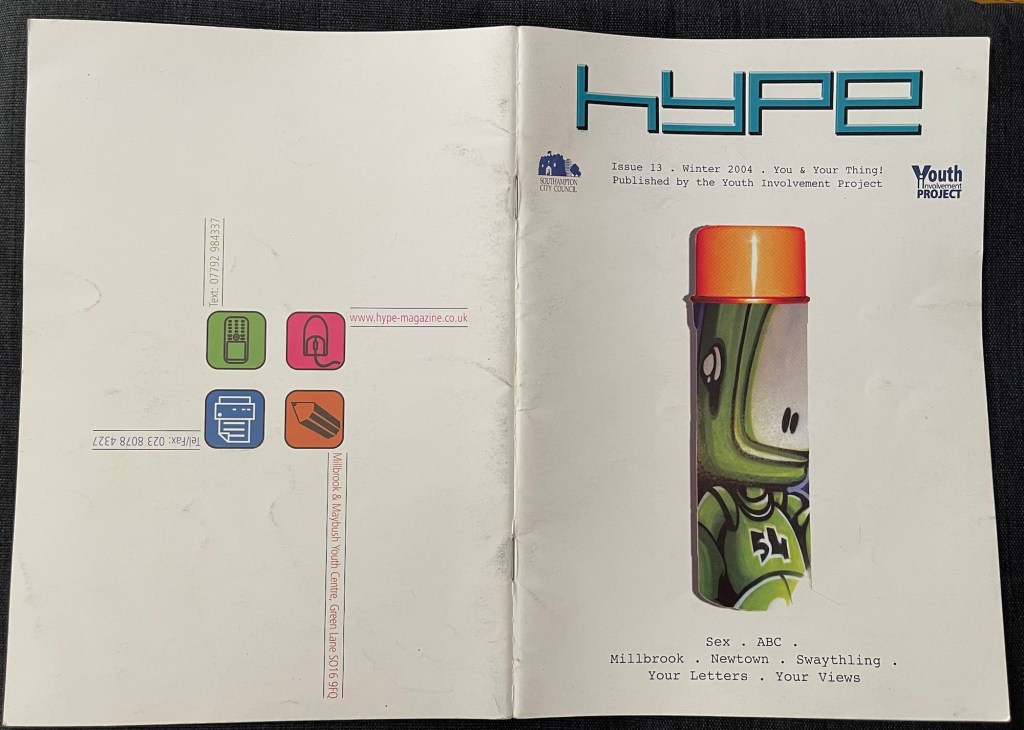
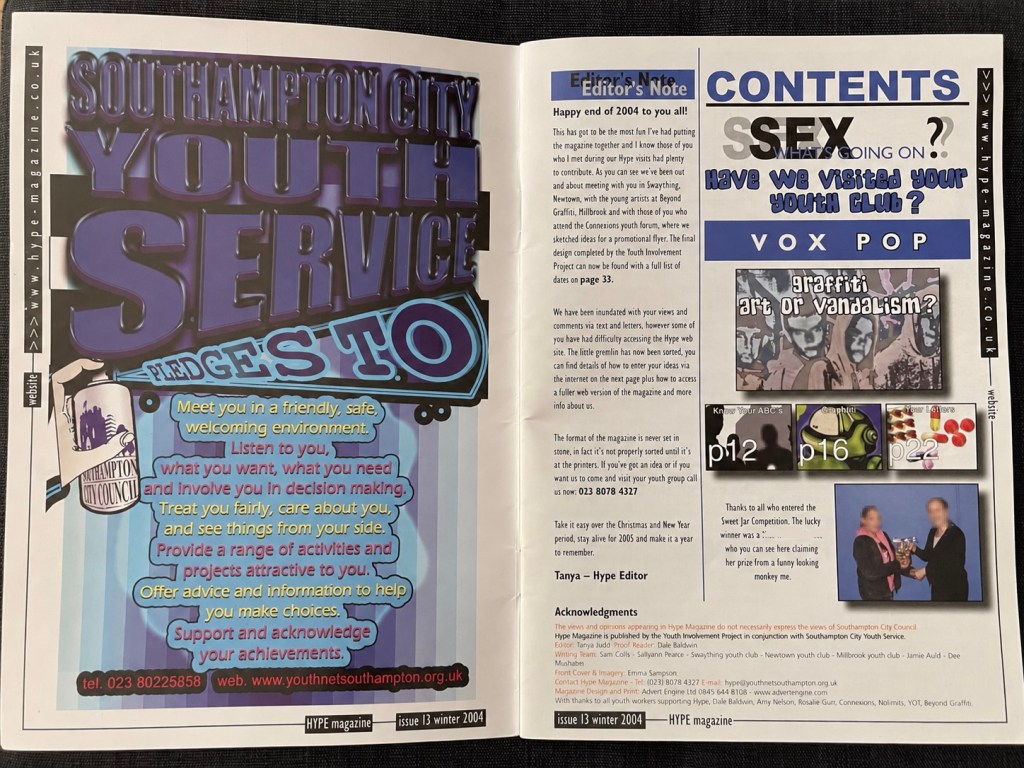
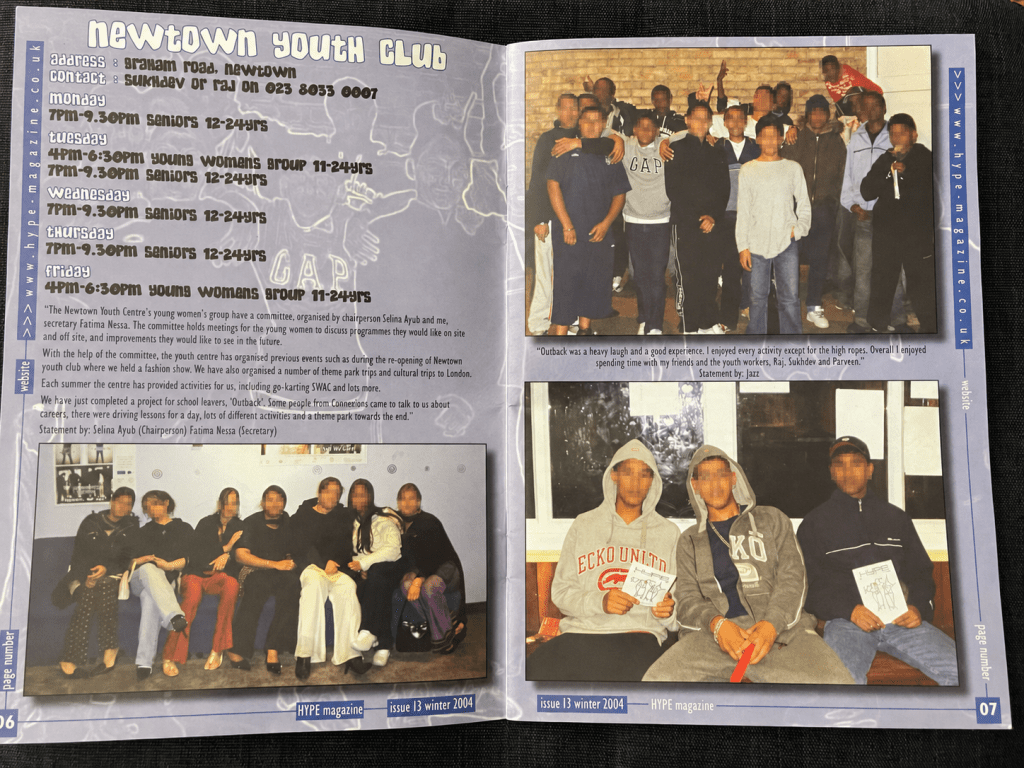
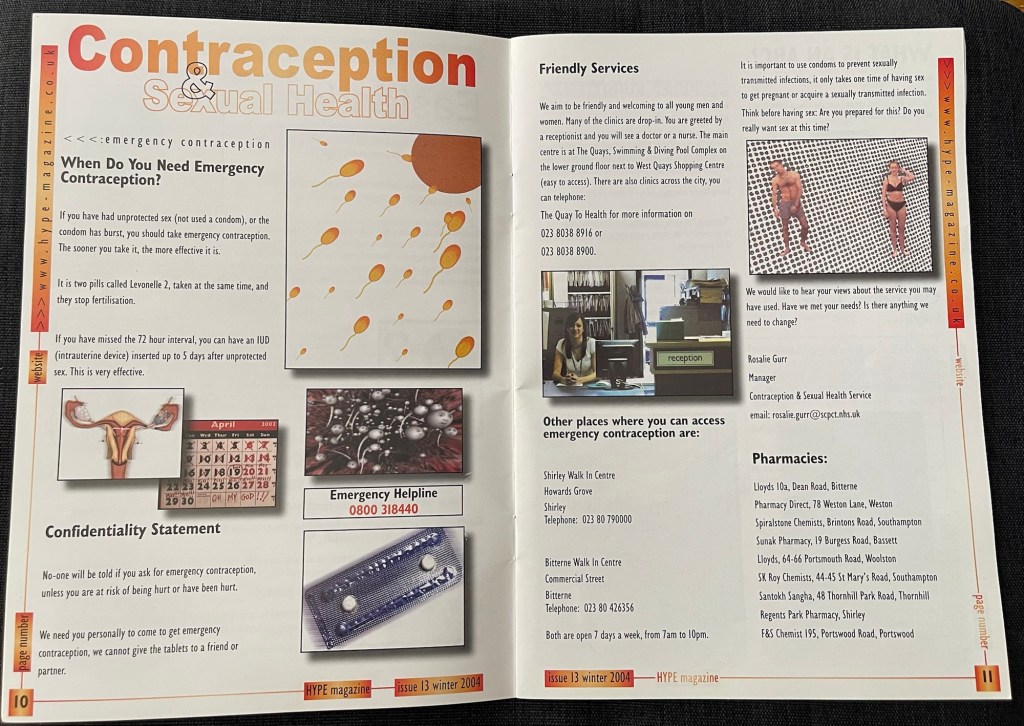
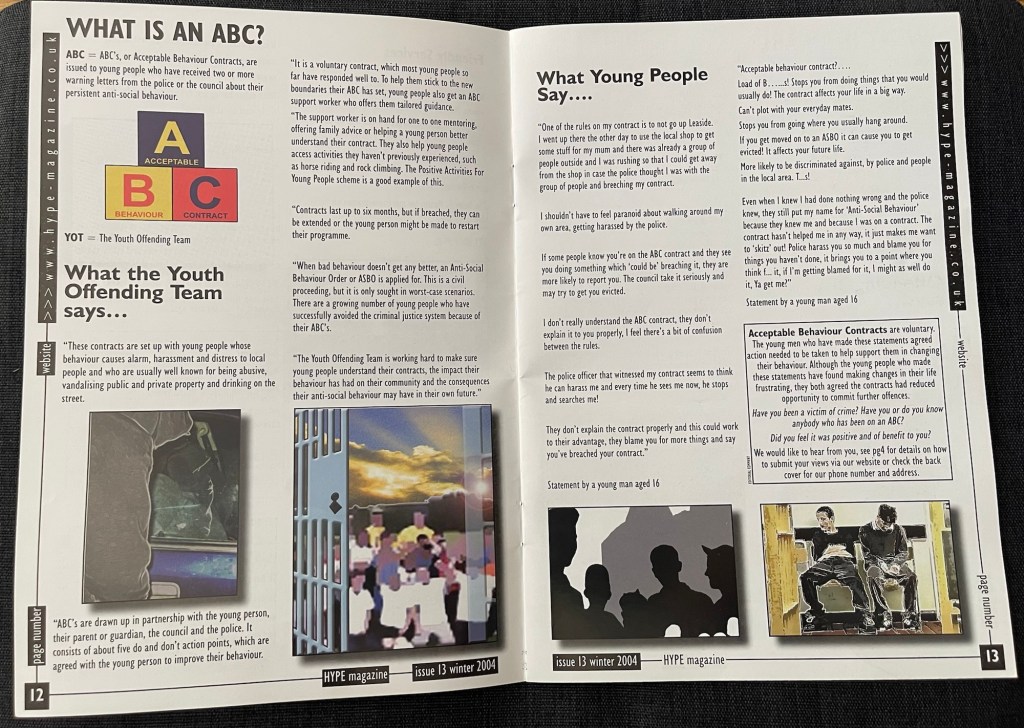
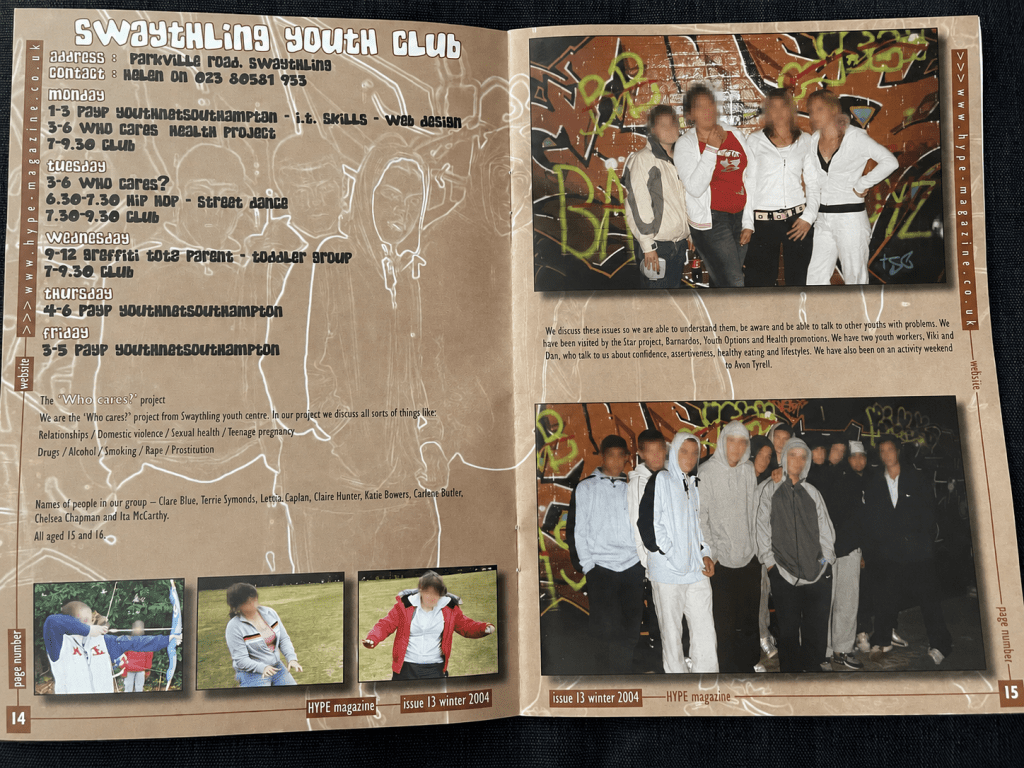
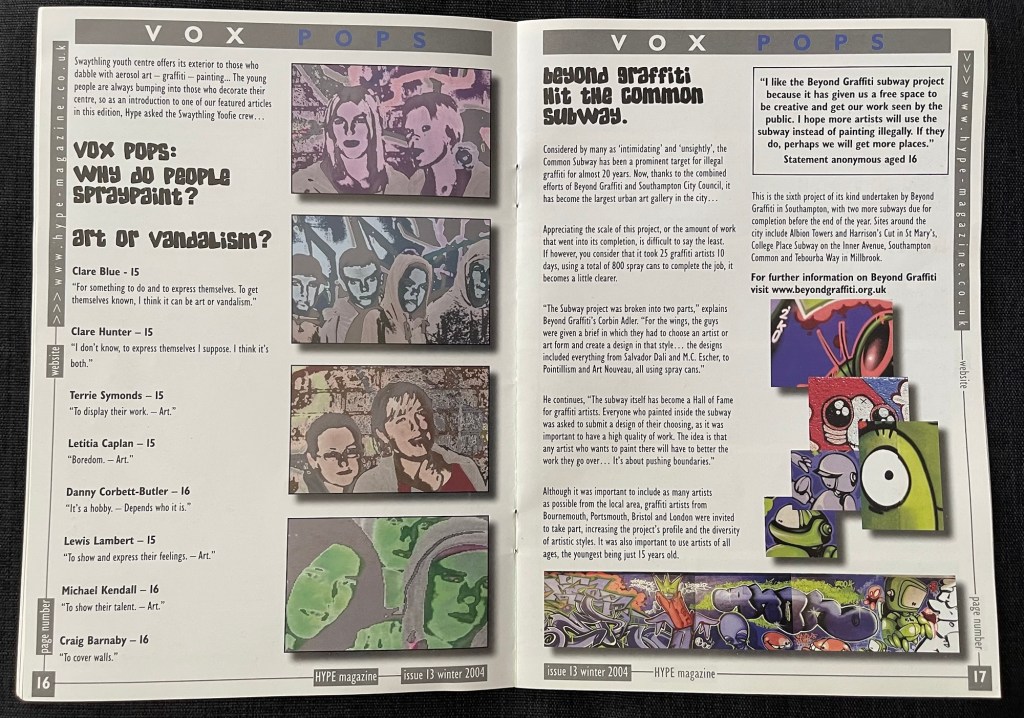
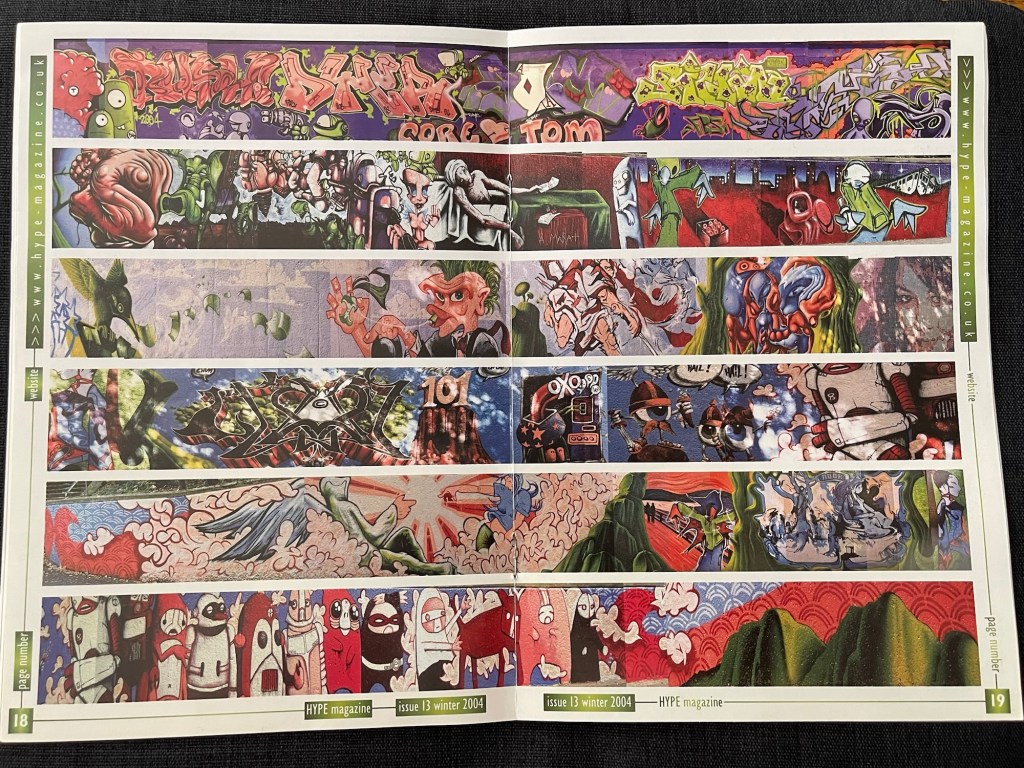
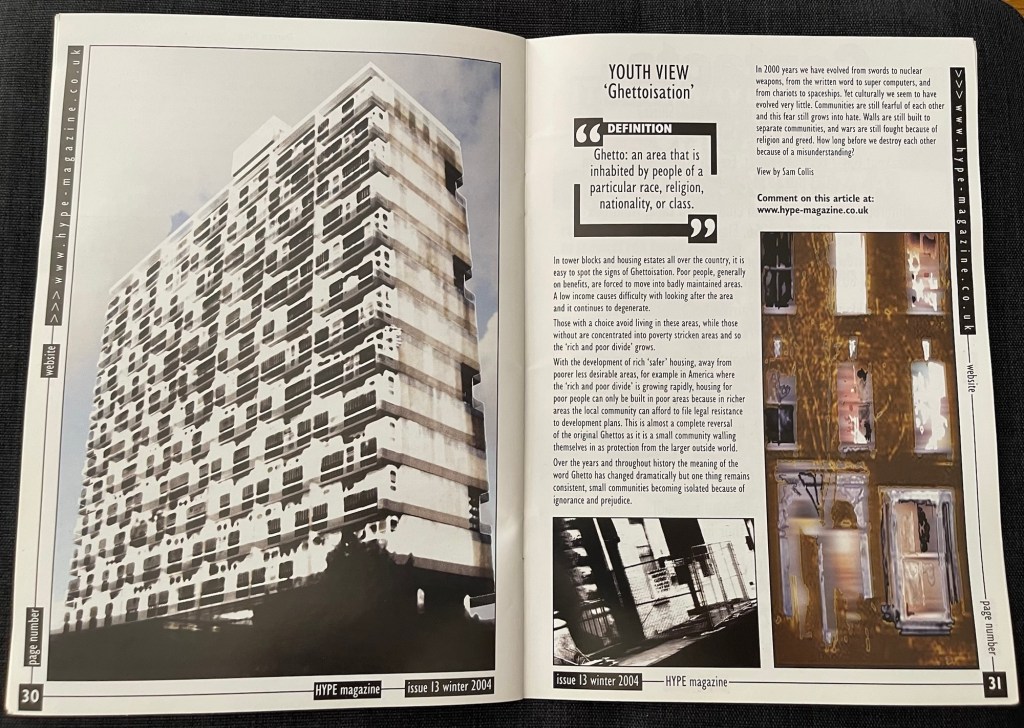
Hype Magazine sample, 2003–04. Faces have been obscured to protect the privacy of those pictured.
Earlier practice informing YAW · Southampton · 2001–2005.
This post documents work undertaken before YAW was established, but which informs its present thinking and practice.
 YAW
YAW 