

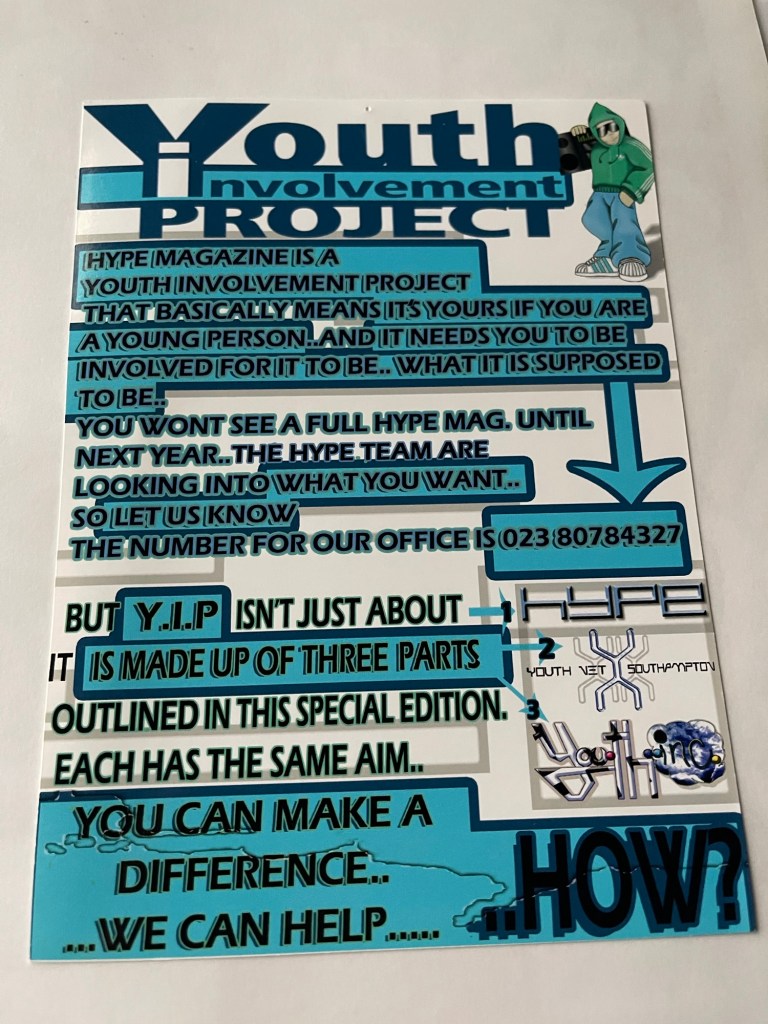
YouthInc did not arrive as an entirely separate project. It developed through the overlap between Hype Magazine, Youthnet and the Youth Information Project, at a point when Southampton City Youth Service was trying to move beyond providing information towards creating more visible forms of youth involvement.
The surviving record is not completely tidy. The archive uses the names Youth Information Project, Youth Involvement Project, Youthnet Southampton and Youth.Inc in overlapping ways. Rather than forcing these into a perfectly orderly institutional sequence, it is more accurate to understand YouthInc as an identity that emerged during a period of transition.
The project’s archived history records that the Youth Information Project was established in October 1999 as part of Southampton City Youth Service. It initially used New Deal placements to produce information and discover what young people wanted from the city.
An archived account of the project’s work records that, in August 2002, the project became part of the Youthnet Southampton initiative. Its base was described as Youthnet’s flagship centre, with former project members becoming part of the everyday technical team.
In mid-2003, the Youth Information Project evolved into the Youth Involvement Project. The archived history names Tanya Judd, Dale Baldwin and Amy Nelson as its management team. A surviving team page lists me as supervisor, Dale Baldwin and Gary Iles as Youthnet technical staff, and Amy Nelson and Alex Russell as YouthInc outreach workers.
A surviving organisational diagram in my archive similarly places Hype, Youthnet and YouthInc within an overlapping field of activity. The projects were related, but they were not interchangeable: Hype provided a publishing structure, Youthnet provided a network and digital infrastructure, and YouthInc concentrated more explicitly on participation, consultation and public involvement.
New Deal inside the project
An archived summary of the Youth Involvement Project describes a project largely produced through New Deal placements. Participants developed experience in journalism, research, photography, graphic design and web design while producing Hype and supporting consultation with young people across Southampton.
This arrangement held two forms of participation together. The project was intended to involve young people in the city, but it was also an employment programme involving people who were themselves navigating unemployment, training requirements and the Employment Service.
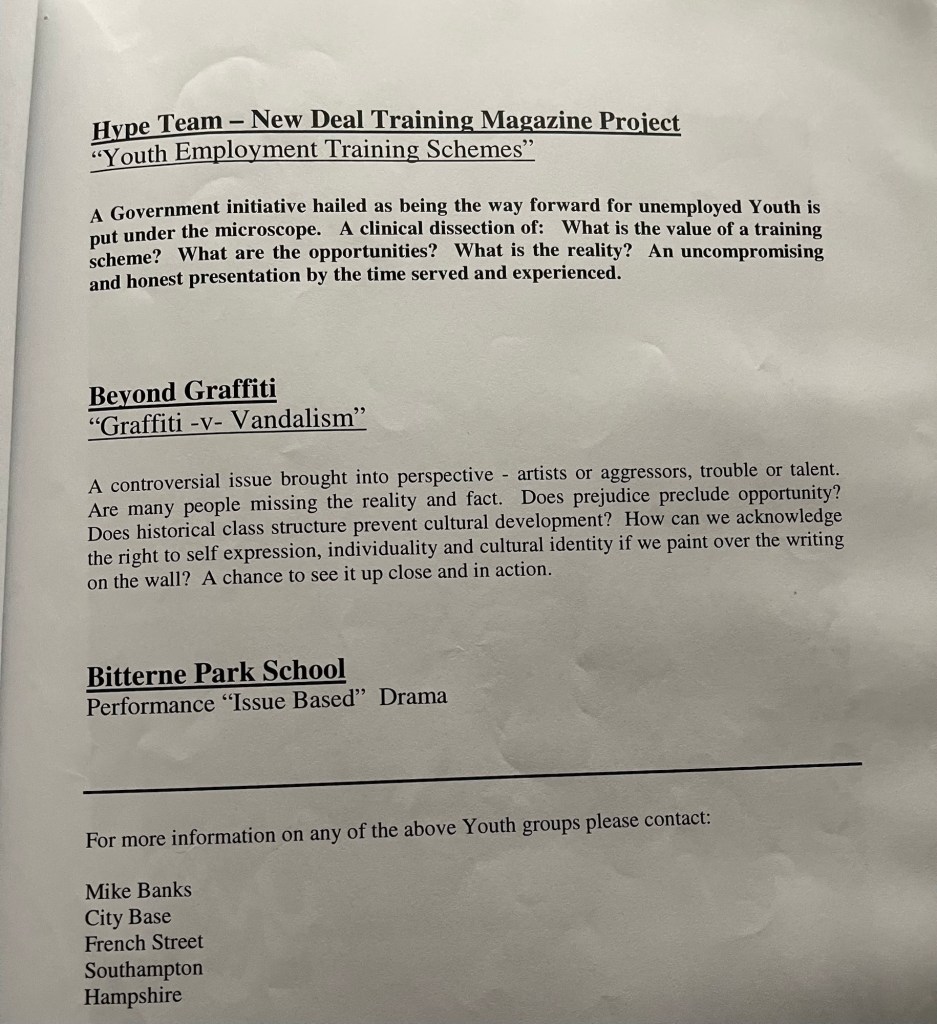
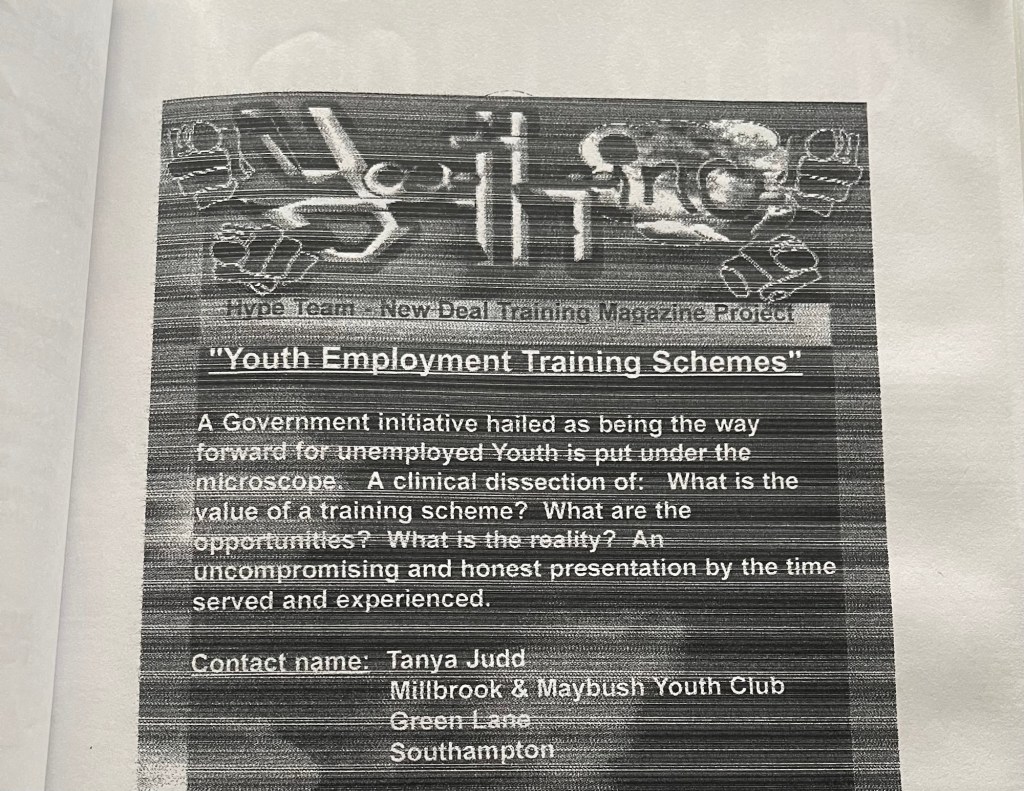
Material I have recently recovered shows that I supported the New Deal team to prepare a presentation about unemployment and the New Deal scheme for the YouthInc conference. The surviving planning sheet is titled “New Deal Clients’ Presentation: Unemployment.”
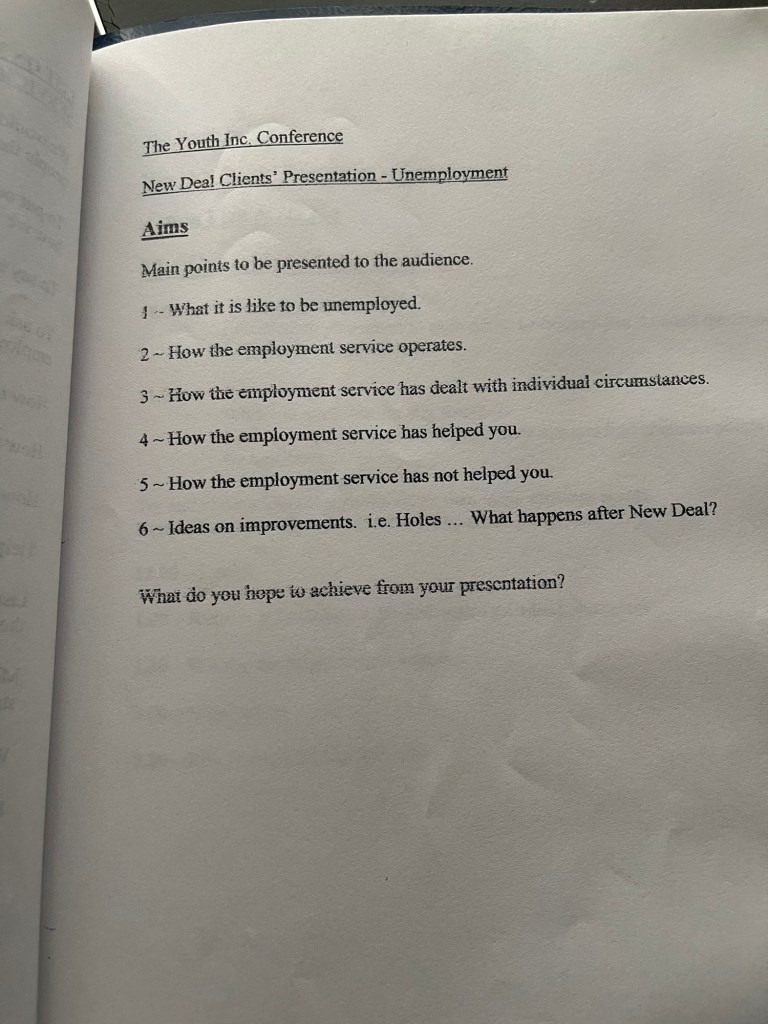
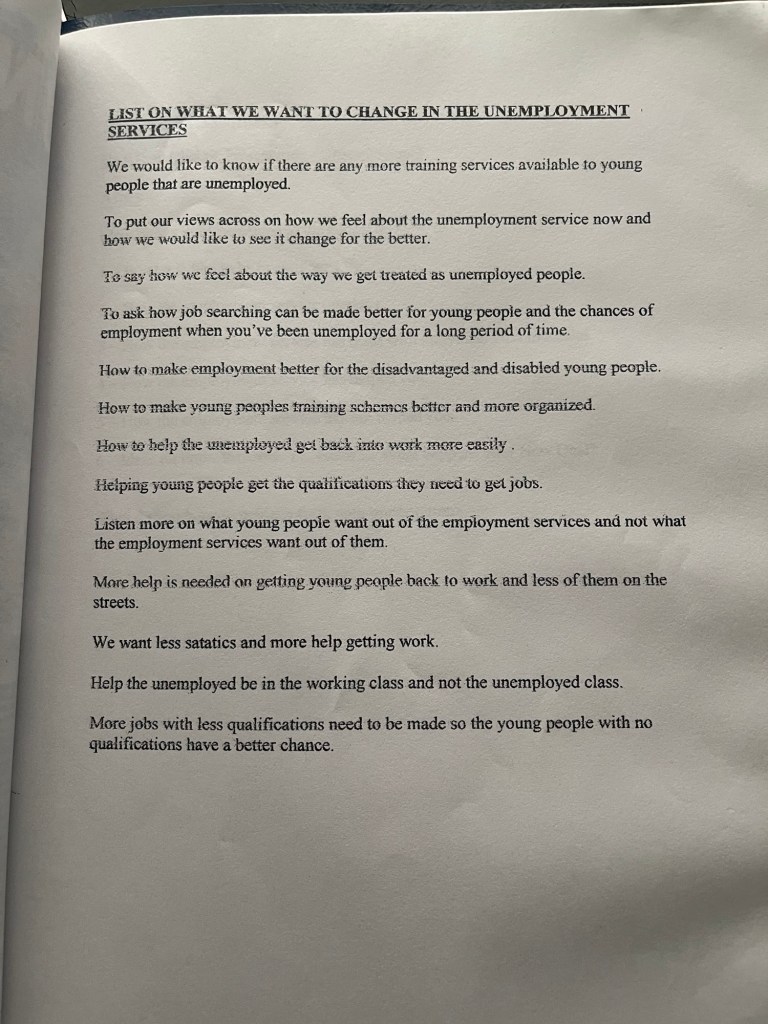

Its proposed subjects included:
- What it is like to be unemployed.
- How the Employment Service operates.
- How it had dealt with individual circumstances.
- How the service had helped participants.
- How it had not helped them.
- Ideas for improvement, including gaps in provision and the question: “What happens after New Deal?”
This was not simply a promotional presentation for the scheme. “How the service has helped you” was deliberately placed alongside “how the service has not helped you.” Participants were being supported to describe the programme from inside it, including its failures and what happened when its temporary structure ended.
That position is significant. The presenters were simultaneously participants in employment policy and producers of knowledge about it. They were not merely being evaluated by the system; they were being supported to evaluate the system themselves.
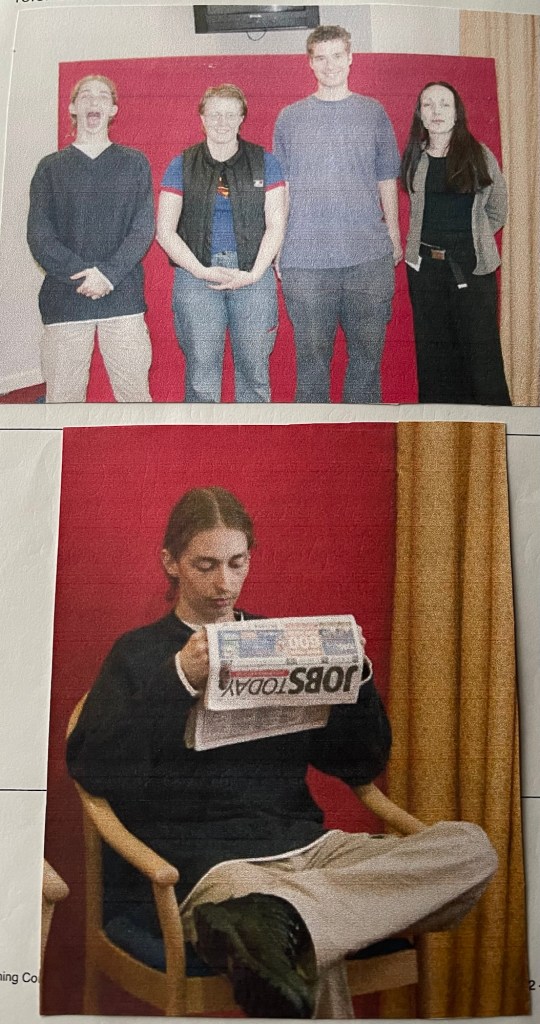
The YouthInc conference
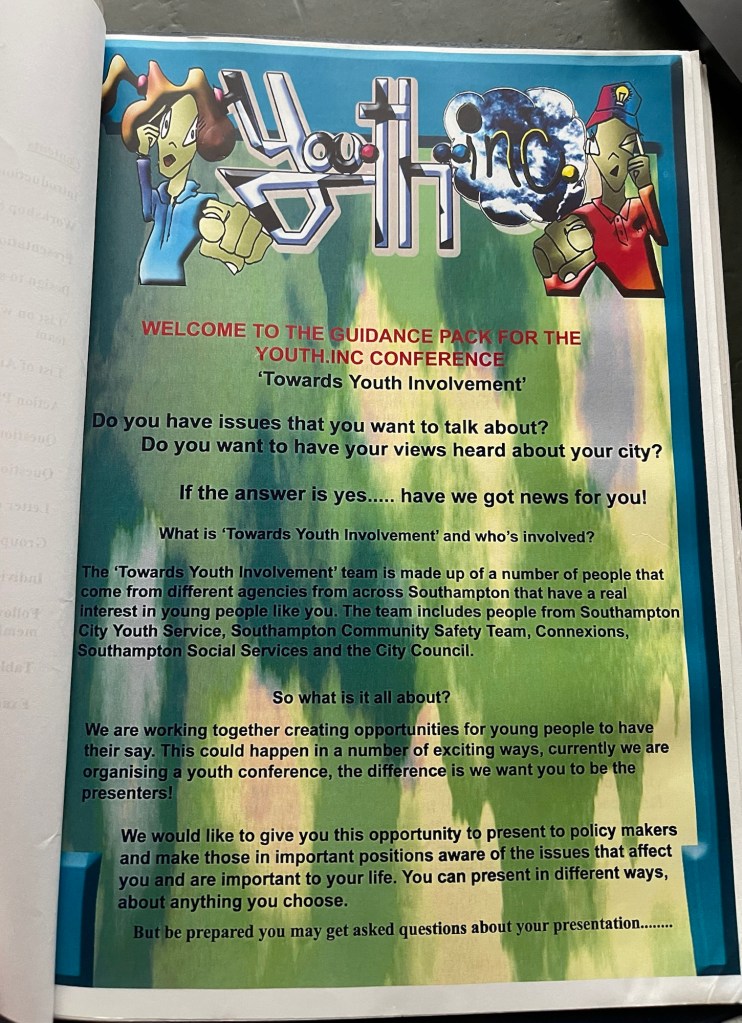
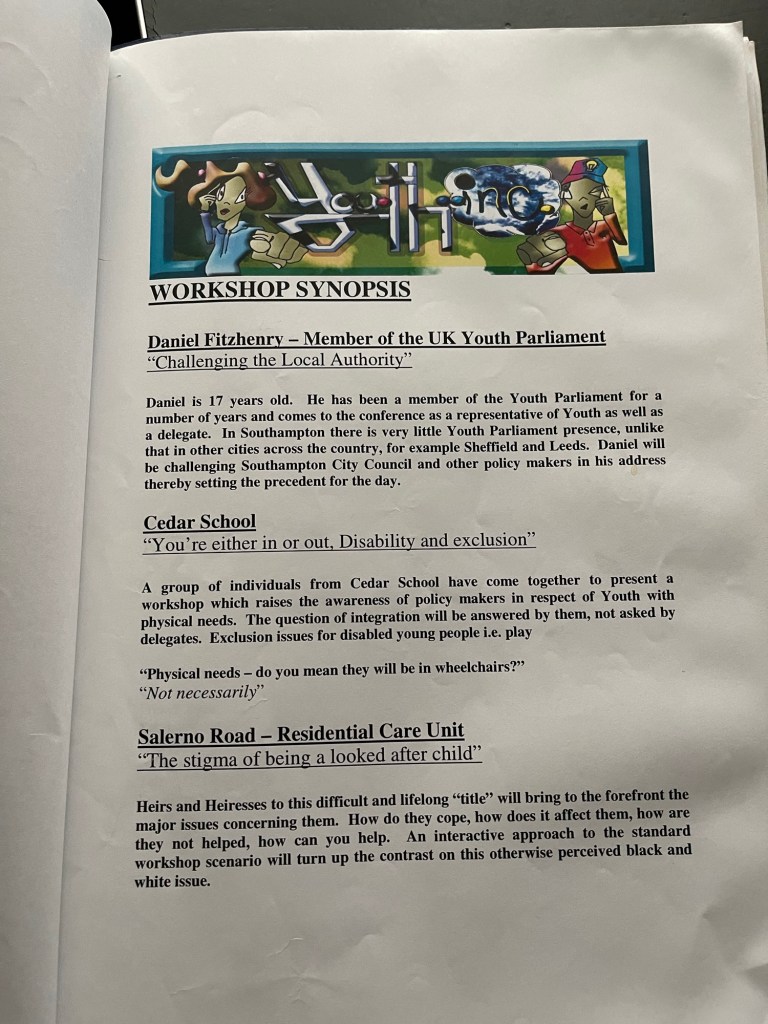
A letter retained in my archive confirms that the YouthInc conference took place at St Mary’s Stadium on 16 June 2003. Three days later, the Daily Echo reported on the event in “Youngsters get to grips with democracy”.
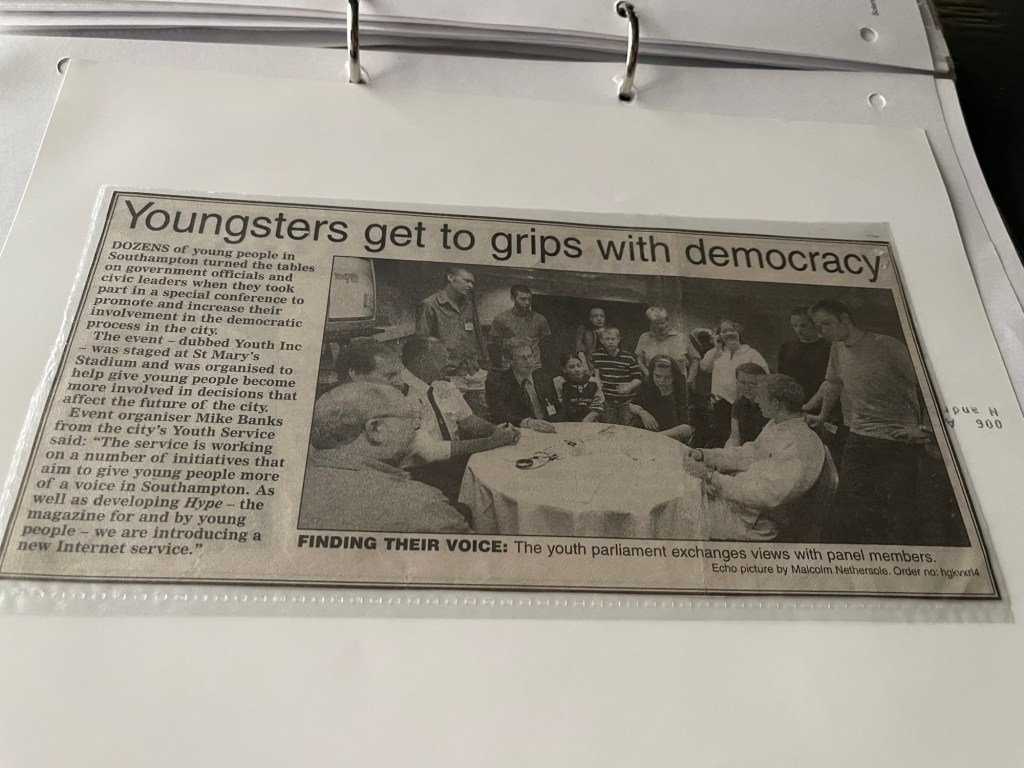
The conference brought young people together with government officials, councillors and professionals from across Southampton. Surviving workshop lists show representatives from social services, health, schools, colleges, the police, the Crown Prosecution Service, Connexions, youth projects and local magistrates across four question-and-answer sessions.
The structure temporarily reversed the usual direction of institutional questioning. Young people were placed in front of professionals and public officials and were able to question them directly.
Mike Banks described Hype and a new internet service as part of the Youth Service’s work to give young people a stronger voice. The newspaper account therefore places YouthInc within a wider programme of democratic involvement rather than treating it as a single event or brand.
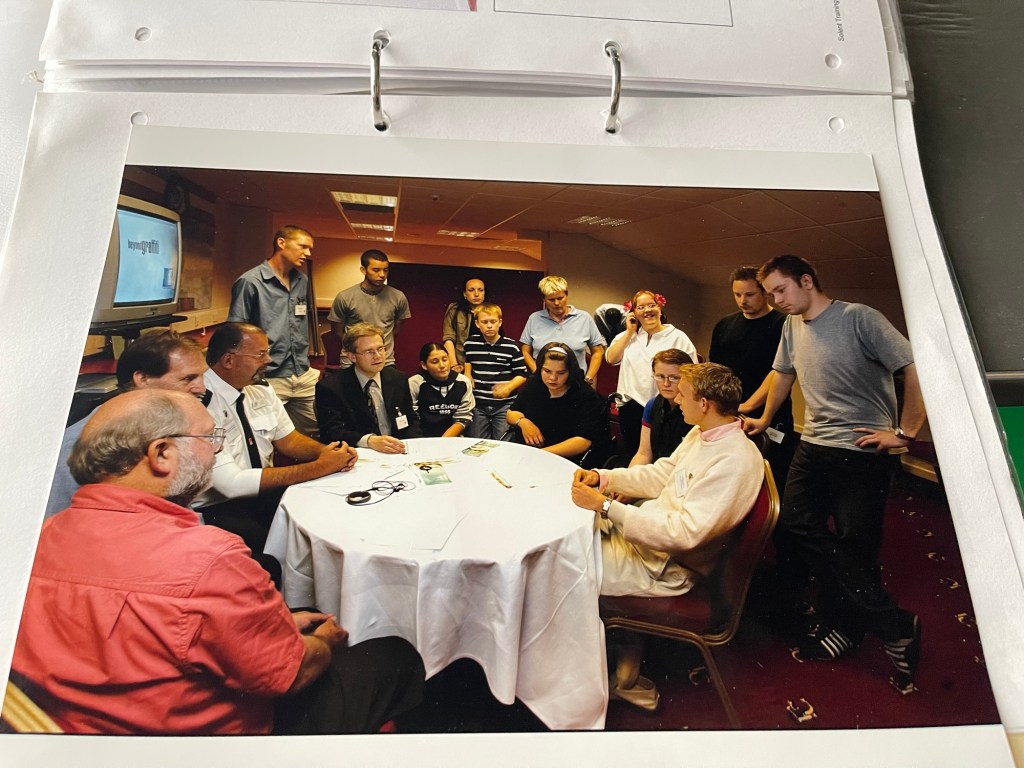
(2003 Archive)
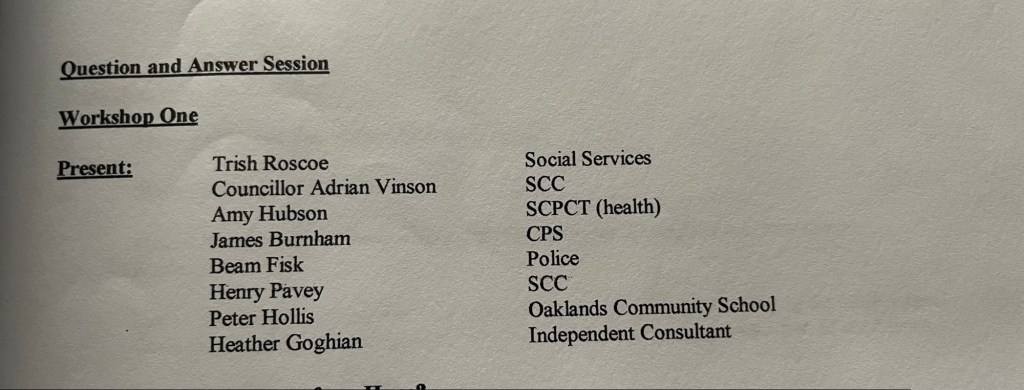
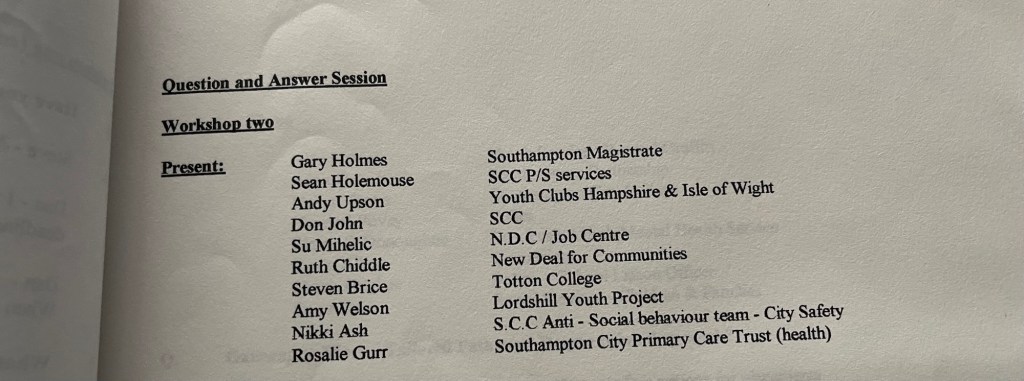
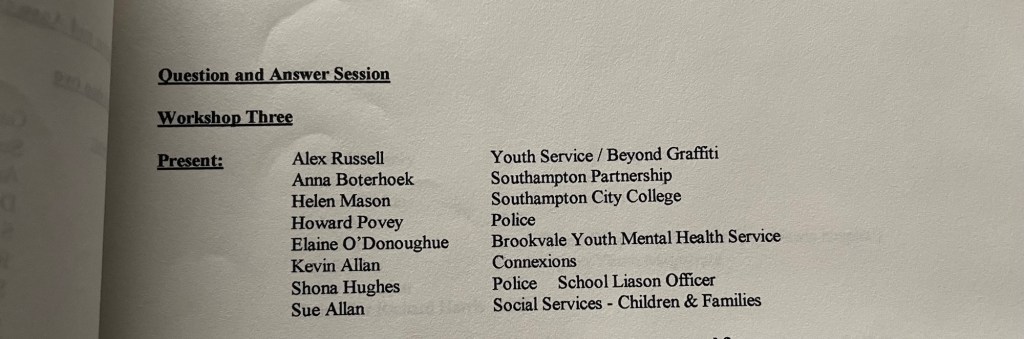
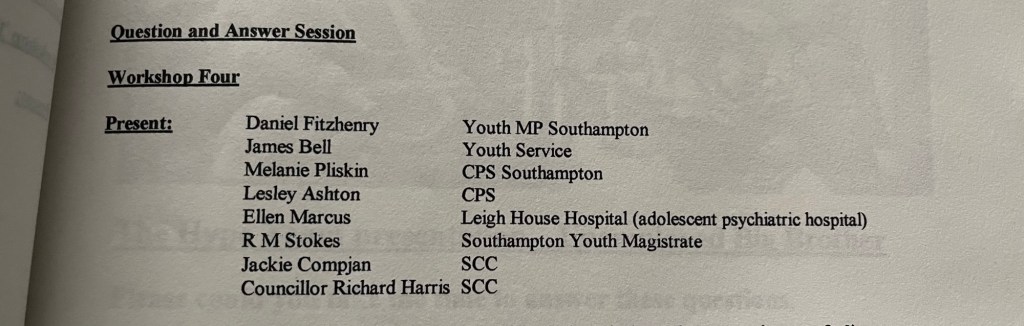
An archived YouthInc Conference photo viewer preserves almost one hundred photographs from the day. The quantity of images indicates the scale of the event, although relatively little accompanying interpretation survives.
The material I have now recovered adds some of that missing context. It shows young people preparing presentations, performances and questions rather than simply attending an event that had been organised for them.
Continuity and overlap
The post-conference letter was signed by Charlie Andrews in her role as Youth Involvement Project Co-ordinator. This adjusts the chronology I had previously reconstructed from memory. I believed I took over from Charlie in 2002, but the letter demonstrates that she remained involved in the wider project during 2003.
It also thanks the group I supported for its performance at the conference, offers certificates and vouchers to those who participated, and proposes a follow-up evaluation to record their thoughts and feelings about the event, with a celebratory meal at my favourite restaurant of the time, The Bouzy Rouge, then, based by the side of the Bargate Centre.
That follow-up matters. Participation should not end at the moment of public visibility. An event may give people a platform, but its longer value depends upon what is recorded, what is returned to participants and whether anything changes as a result of what they contributed.
At the same time, the letter shows the institutional forms surrounding participation: certificates, vouchers, evaluations and the possibility of recording the performance. These are not inherently negative, but they remind us that participation was being invited, structured and documented by the service.
Participation and power
The YouthInc conference deserves neither dismissal nor uncomplicated celebration. Young people occupied a major public venue, presented their work and spoke to professionals who had come to listen. The service created a platform through which their experiences and ideas could enter a wider civic conversation.
Yet visible participation does not necessarily transfer lasting decision-making power. An invitation to speak is not the same as holding authority. Participation requires a visible route between what is expressed and what subsequently changes.
The New Deal presentation makes this tension particularly clear. Participants were given a public voice, but they were also asking what would happen to them when the programme ended. Their questions concerned the limits of the very system that had made their participation possible.
Recovering this material has also altered my understanding of my own place in the work. I was only in my early twenties, and the archive reveals a greater combination of editorial, design, organisational and support responsibility than I had retained in memory. That does not make the work an individual achievement, the projects depended upon young people, colleagues, technical staff and a wider public service; but it corrects an account in which I had understated my own role.
YouthInc helped me understand that voice is not something an institution simply “gives” to somebody. People already have voices. The practical question is whether structures exist through which those voices can travel, encounter power, receive a response and leave some evidence of having mattered.
Earlier practice informing YAW · Southampton · 2001–2005.
This post documents work undertaken before YAW was established, but which informs its present thinking and practice.
 YAW
YAW 