
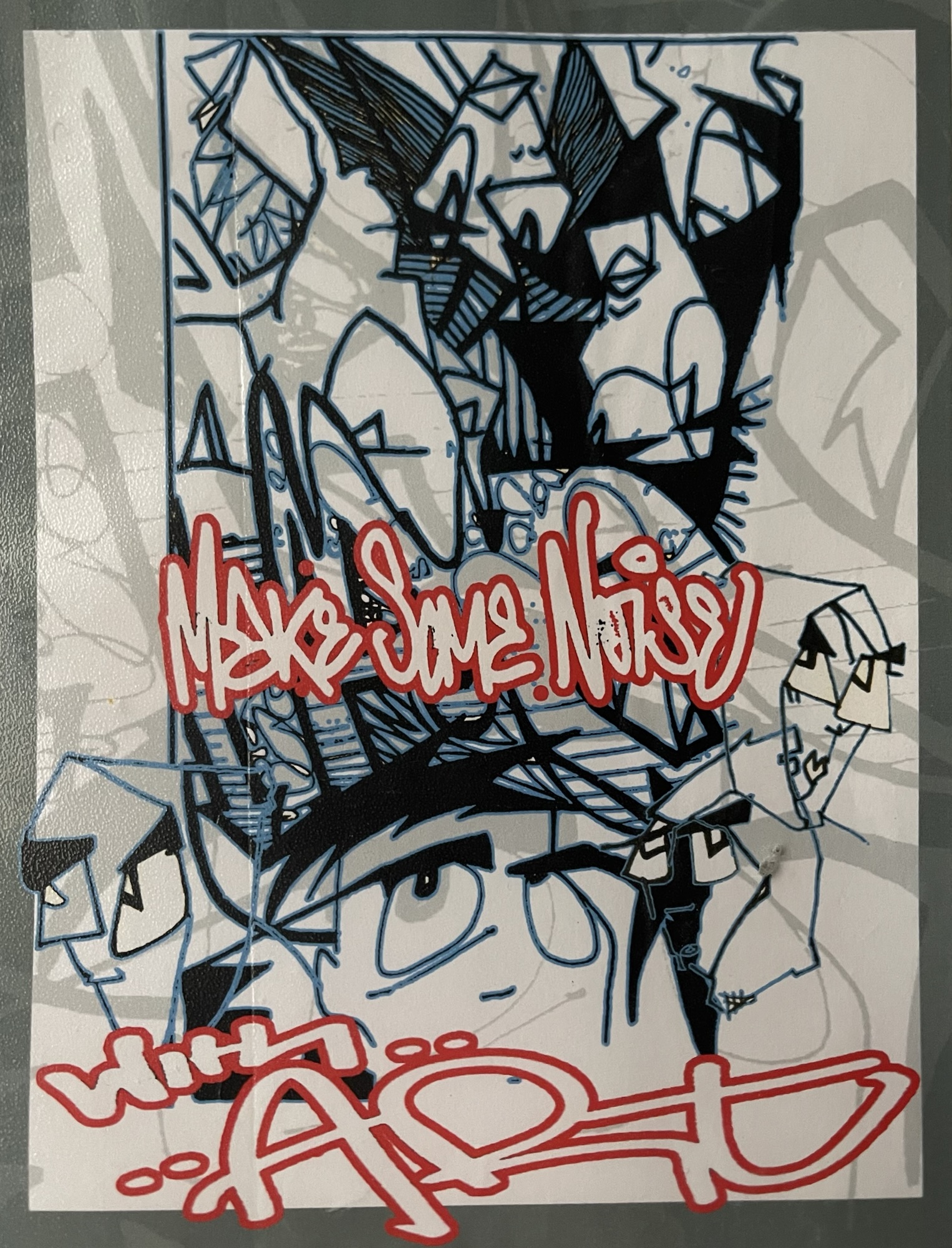
Starting with a name
Make Some Noise began with a name; a name a young person chose for themselves or simply a word they wanted to work with.
It could be their own name, a nickname, an alias or something newly invented. That decision gave the art project its starting point. Before asking somebody to explain themselves, we could offer them a surface, some tools and permission to make a mark.
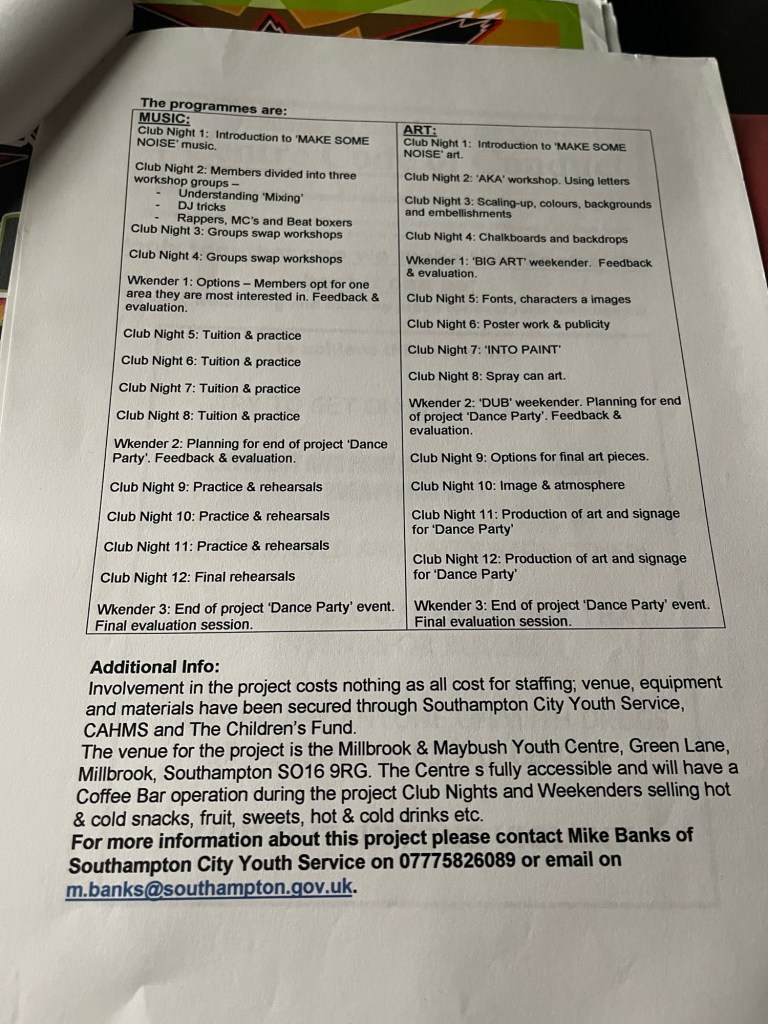
Make Some Noise was an art and music project held at Millbrook and Maybush Youth Centre in 2003 and 2004. I designed and facilitated the art strand, supported by £8,000 from the Children’s Fund. The surviving project material also names Southampton City Youth Service, CAMHS and Saucepans.
The project offered places to up to fifty young people through a structured three-month membership. It ran across twelve Wednesday evening sessions and three weekend sessions.
Alex Russell designed and led the parallel music strand, which included mixing, DJ skills, rappers, MCs and beatboxers. The art and music developed towards a shared dance event, with the visual work extending into backdrops, publicity and signage.
Developing a visual identity
The art strand began with each young person choosing a name or word and thinking about how it might look.
We worked with letters first. Participants drew their name, developed it into a personal design and began scaling it up. From there, the work moved through colour, backgrounds, embellishment, different fonts, characters and images.
We looked at artists who used names, aliases and pseudonyms within their work. A name could be stretched, repeated, broken apart or incorporated into an image. The weight of a line, the shape of a letter and the space around a word all changed how it was encountered.
I had experimented with style writing since 1990 and had been using spray paint since 1992. Make Some Noise gave me an opportunity to bring some of that experience into a structured youth-work setting.
The intention was not to reproduce one recognisable style. It was to help participants understand that visual language develops through decisions. They could decide how loudly or quietly a name occupied the page, what it revealed and what it withheld.
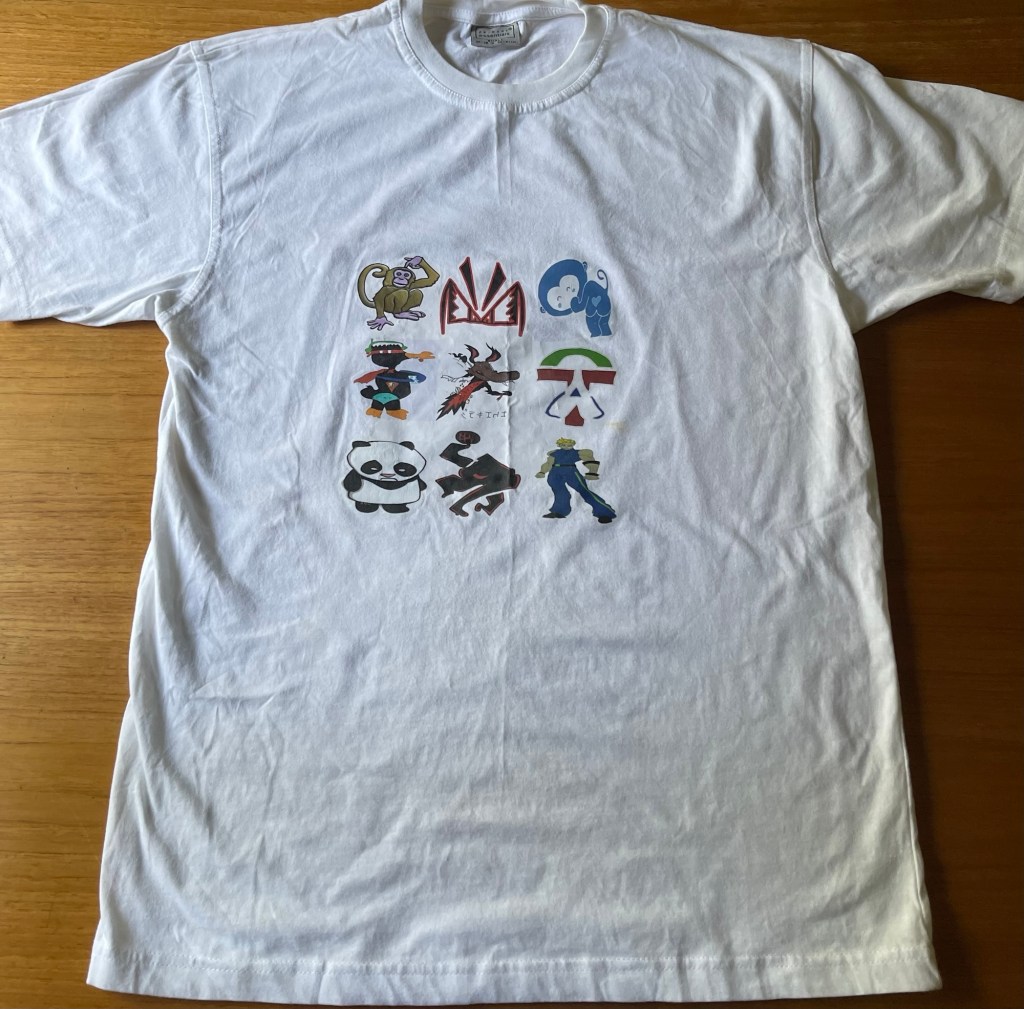
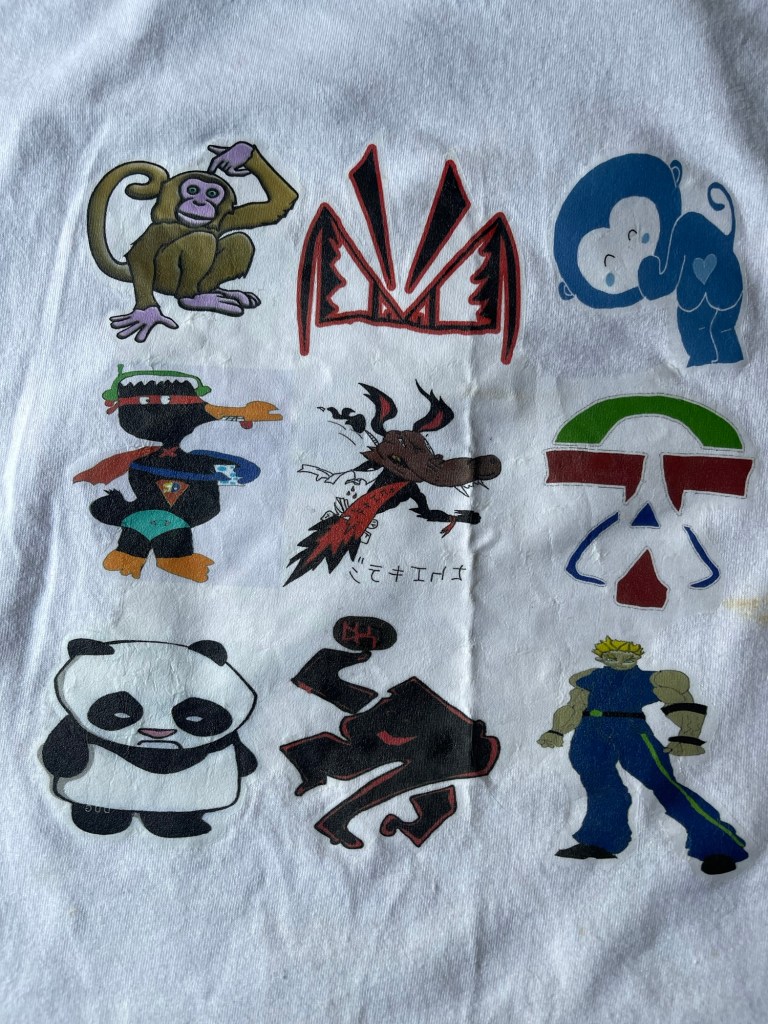
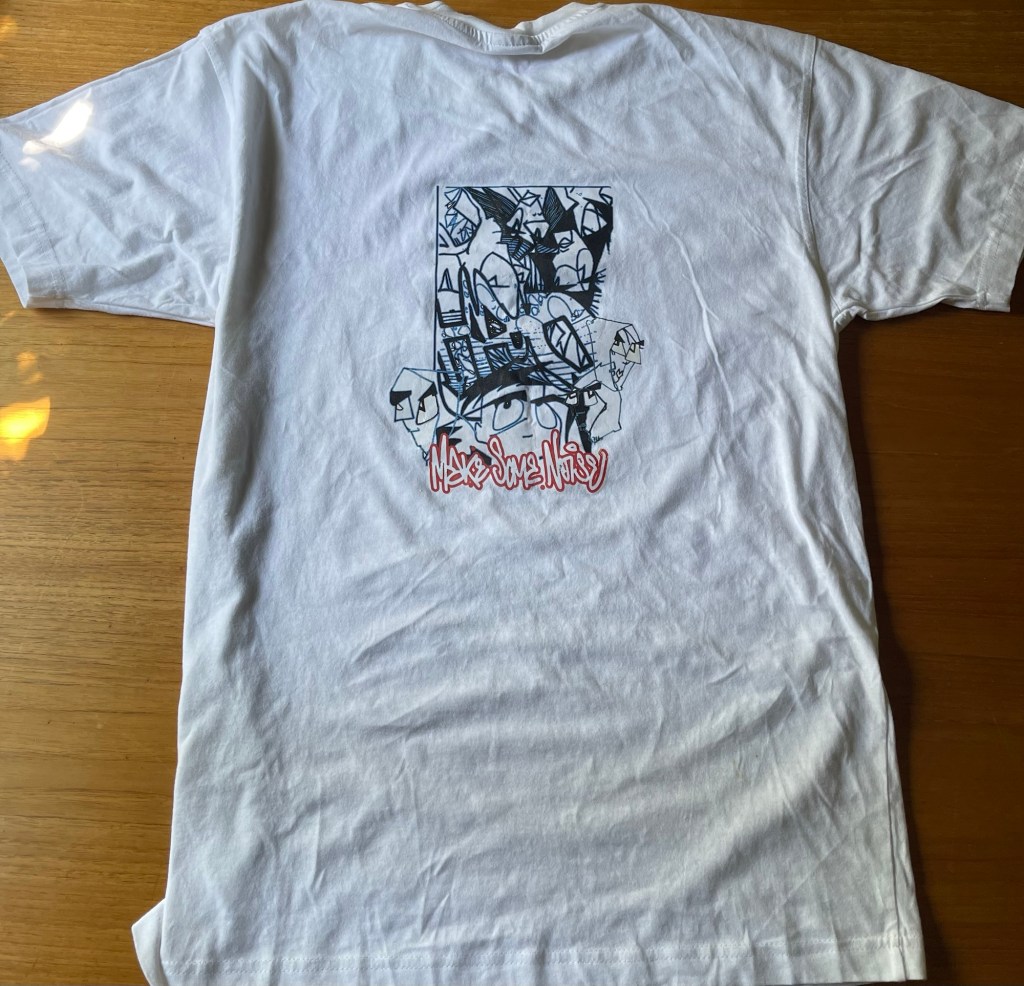
The project moved between sketchpads, paint, spray-can work, chalkboards and much larger surfaces. Some designed characters also. We introduced the basics of Photoshop, allowing hand-drawn work to be scanned, altered, layered and prepared for other forms of production.
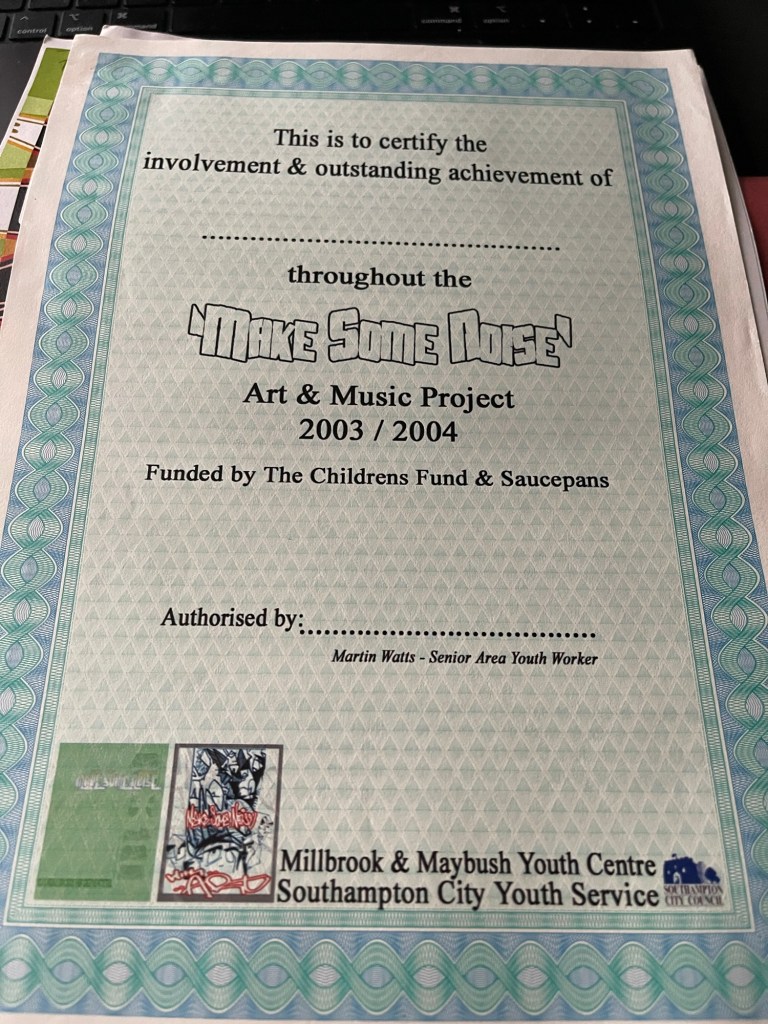
Staff helped transfer the finished designs onto customised T-shirts. A young person could therefore wear an image that had begun as a name drawn during a workshop. Certificates provided another form of recognition, particularly for participants whose creative abilities were not always acknowledged through conventional education.
BIG ART
The weekend sessions allowed the work to expand beyond the scale and pace of the Wednesday evenings.
The BIG ART weekender formed the grand finale of the art strand. We worked on huge canvases, made and ate pizzas together and spent longer periods developing the work. The archive recalls not only completed objects, but the social and practical conditions around them: materials, food, setting up, waiting, helping one another and clearing away.
A follow-up letter signed by Alex and me refers to drawing, painting, mixing music, eating together, sketchpads, paintings and large canvases. It asked participants to return and collect their work because, as we wrote at the time, “we hoped they would value it.”
That sentence now seems important. The work was intended to leave with the person who had made it. It was not produced to become evidence belonging to the service.
Freedom within a structure
The recovered archive has changed how I remember Make Some Noise. I retained the colour, activity and scale of the project, but not the full extent of the organisation surrounding it.
The documents include membership information, referrals, targets, evaluation, a code of conduct and a red-and-yellow-card system. Applications could be endorsed by a support worker, although participation remained voluntary.
The project therefore offered creative freedom within a clearly organised and funded structure. Those conditions made the work possible, but they also shaped who entered, what was expected and how participation was recorded.
New Deal participants working through Hype supported the sessions and helped produce materials. They were developing their own skills and employment experience while helping to create opportunities for younger participants. Other staff contributed to preparing materials, transferring designs, organising food, setting up and clearing away.
Make Some Noise was collaborative. I designed and held the structure of the art strand, but the images, sounds and performances belonged to the people producing them.
Looking back, the visible outcomes are only part of the record. The T-shirts, certificates, paintings and large canvases demonstrate that something happened. They cannot fully describe the attention, negotiation and gradual confidence through which the work developed.
The strongest part of the project remained its starting point. A young person could begin with something they controlled: a name, a line and a decision about how they wanted it to appear.
Before somebody is asked to find their voice, they may need a surface on which to make a mark.
Archive note: This account draws on the surviving Make Some Noise programme and session plan, membership information, code of conduct, Children’s Fund and Saucepans certificate, follow-up letter signed by Alex Russell and Tanya Judd, personal archive and recollection. Individual artworks and photographs are treated as collaborative or unattributed unless their authorship can be confirmed.
Earlier practice informing YAW · Southampton · 2003–04.
This post documents work undertaken before YAW was established, but which informs its present thinking and practice.
 YAW
YAW 