
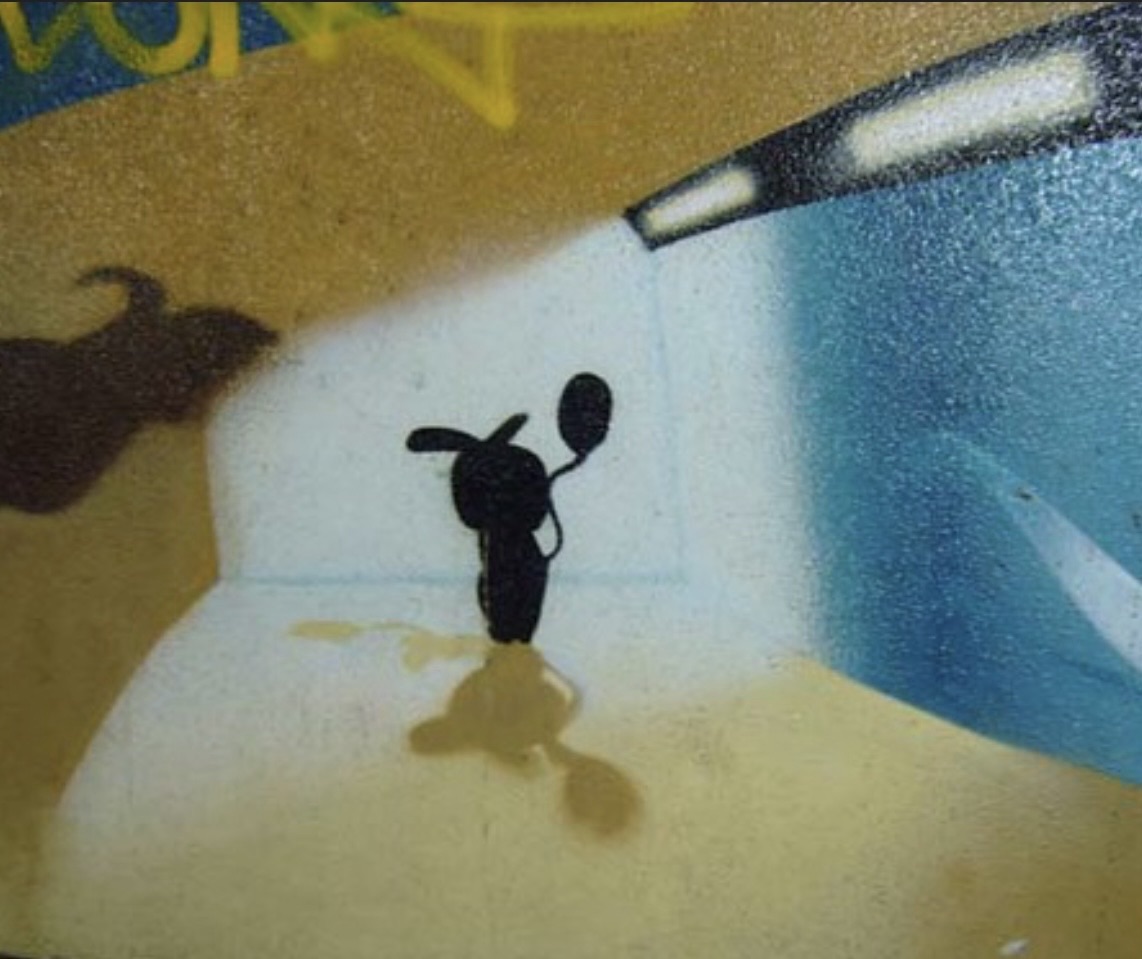
Founded as a youth community project in 1987, Beyond Graffiti connected Southampton’s emerging hip hop culture with youth work, community participation and public space. This account brings published records into conversation with my firsthand experience of the project’s Paynes Road period and its influence on my later practice.
A note on the record
Beyond Graffiti occupies an important but poorly documented place in Southampton’s cultural history. It is often remembered through the painted subway beneath The Avenue on Southampton Common, but the project began much earlier and encompassed more than murals.
This is therefore a working history rather than a definitive institutional account. Published sources establish the project’s origins and several of its public commissions. The internal history of Hype Magazine, Youthnet and YouthInc between 2002 and 2005 is drawn from my firsthand involvement and surviving personal archive. These sources are identified separately at the end.
Origins
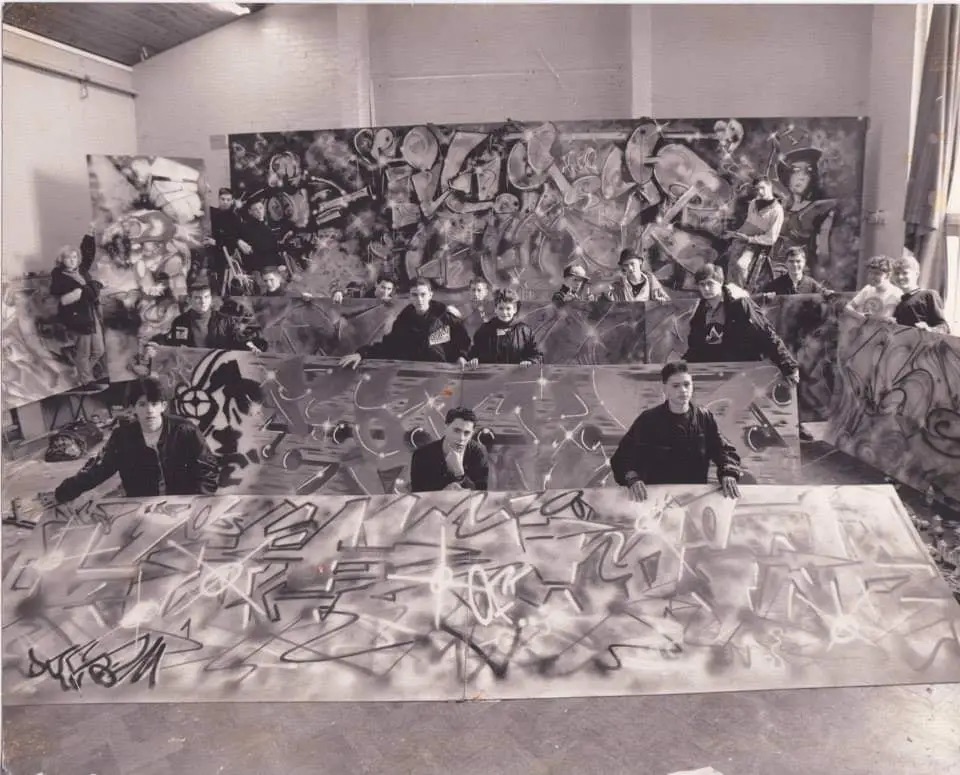
Participants in the original Beyond Graffiti youth and community project, Southampton, circa 1987. The project was led by Southampton City Youth Service workers Mike Banks and Jacquie Lee, with John McAndrew. Photographer currently unknown.
Southampton Hip Hop Heritage dates the launch of Beyond Graffiti to 1987. Led by Southampton youth workers Mike Banks and Jacquie Lee, its purpose was to bring together young artists, musicians, poets and writers; enabling them to develop their abilities and express themselves.
The project worked with young people in their own areas and on their own territory. Graffiti was understood as part of the wider culture of hip hop and as a visual language through which people could find one another, develop skills and participate in community activity.
This breadth matters. Beyond Graffiti was not originally established as a scheme to decorate a particular wall or prevent vandalism. It was a youth and community project that recognised existing cultural practices as possible starting points for relationships, learning and collective work.
The Southampton Common subway is therefore part of the project’s later history, not its point of origin.
Commissioned work and public space
In February 2002, Southampton City Council approached graphic designers Corbin Adler and Slam Daniels, to transform the paddling-pool kiosk on Southampton Common. A contemporary BBC Southampton feature records that the kiosk had become a repeated target for graffiti. Corbin and Slam responded by involving local young people through workshops, worksheets and questionnaires; their contributions were developed into sketches and three-dimensional computer designs before the final work was painted. The commission helped consolidate a renewed phase of Beyond Graffiti, bringing graphic design, youth work and graffiti practice into a shared public project.
Source: Stephen Stafford, “Got Something to Spray”, BBC Southampton, 18 September 2002.
Rather than simply removing the writing, the project involved young people who were already using the site. Community consultation included local schools, users of the Common and members of the Beyond Graffiti collective. The completed work was produced with spray paint; the building was subsequently protected with an anti-vandalism coating.
The case study reports that only minor tags appeared during the following eighteen months and that similar projects were subsequently commissioned. This is significant, although the document frames the work primarily through prevention and public reassurance. From a youth work perspective, it also records a different process; existing interests and abilities were used as the basis for participation rather than being treated only as a problem to eliminate.
In 2003, Beyond Graffiti extended its work from the Common kiosk into Southampton’s city-centre underpasses. A £10,000 council grant funded murals at two sites. Working with young local artists, the group developed the imagery through conversations with residents and regular users of the routes. A photograph taken the following March documents Beyond Graffiti’s work at College Place Subway.
By 2006, a Southampton City Council Street Scene Action Plan formally recorded its partnership with Beyond Graffiti to create murals, improve subways and deter graffiti vandalism.
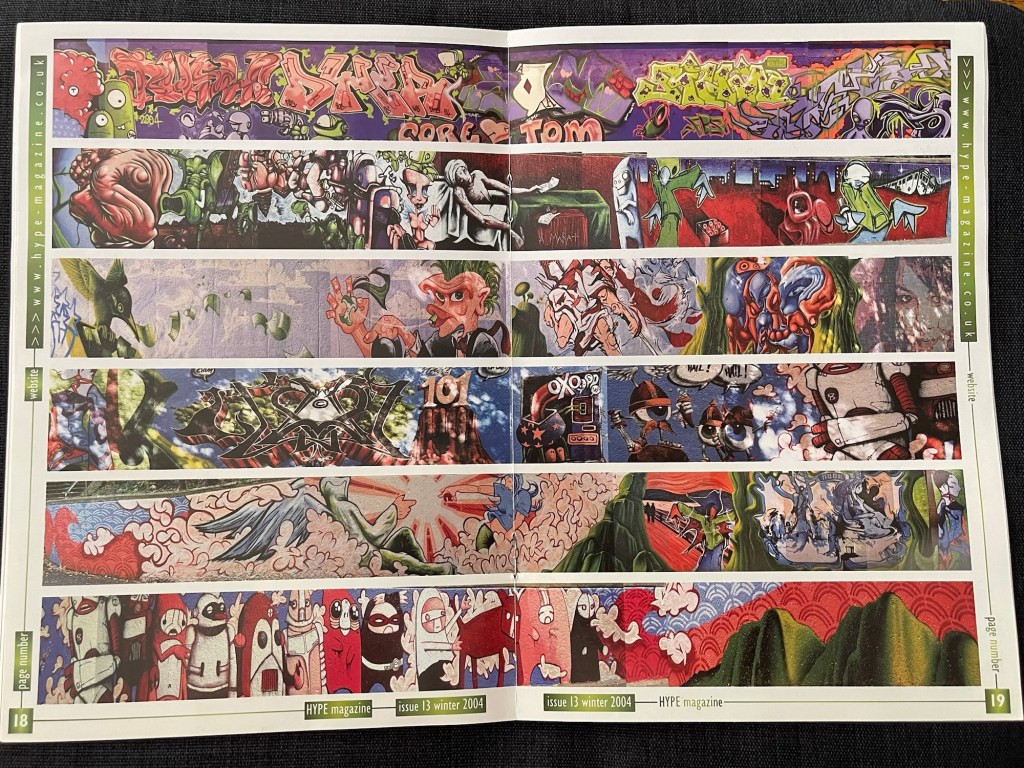
These records reveal a productive tension. The council described the work through terms such as prevention, improvement and controlled graffiti. For writers, however, a permitted site also offered time, scale, safety, peer contact and public visibility.
A legal wall and a Hall of Fame are not necessarily the same thing. A legal wall describes the permission attached to a site; a Hall of Fame describes the cultural position a wall acquires through repeated use, recognition and exchange between writers. A commissioned mural may be legal without becoming a Hall of Fame. Beyond Graffiti introduced me to this wider ecology of authorised walls, public commissions and community based mural projects.
The Paynes Road period: a firsthand account
My direct connection with Beyond Graffiti began during 2002 and 2003.
At that time, the Hype Magazine and Youthnet team moved out of its base at the Bargate Internet Café. We were temporarily accommodated in the Beyond Graffiti office in Paynes Road, Shirley.
Mike Banks took over the management of Hype and Youthnet from Simon Whitmore. I had taken over the editorship of Hype Magazine from Charlie Andrews. Mike oversaw the magazine’s redevelopment and managed the emergence of YouthInc as a broader umbrella for the connected strands of work.
I worked with graphic designers to give Hype a cleaner and more clinical editorial identity. We examined the visual systems used by contemporary magazines, including Loaded, particularly the use of white space, strong mastheads and clear separation between editorial elements. The redesign was not simply cosmetic; it was part of making the magazine function as a credible citywide publication produced with young people.
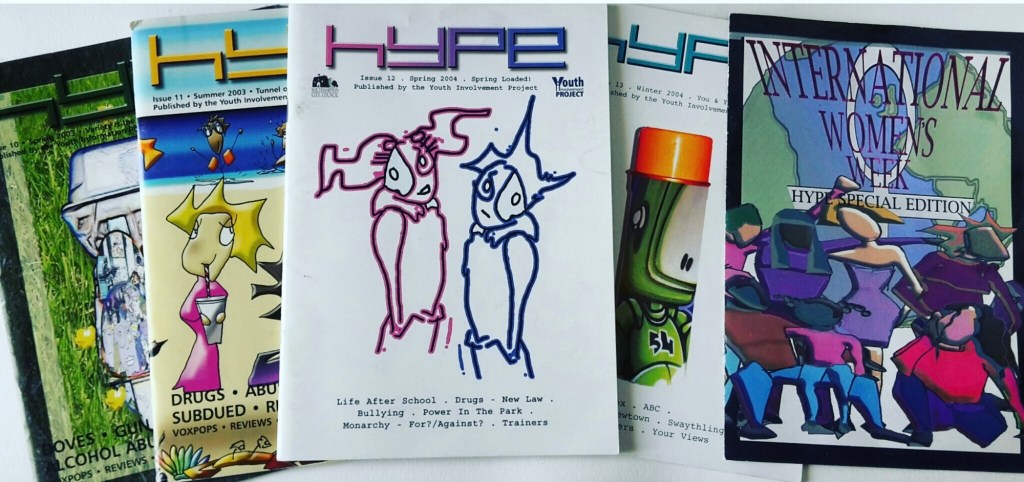
The published record supports the wider youth participation role of Hype and Youthnet. Southampton City Council’s 2005 strategy, Towards Positive Youth Engagement, identified access to Hype Magazine and Youthnet as evidence that young people were receiving information and finding opportunities to have their views heard. A subsequent council report described them together as the City Youth Service Youth Involvement Project.
These council documents do not record the office moves, management changes or development of YouthInc. Those details are based on my direct involvement and should be understood as firsthand evidence contributing to an incomplete public archive.
The Paynes Road arrangement was temporary. We later moved into a dedicated office at Millbrook and Maybush Youth Club after the space had been decorated and prepared for our use.
From magazine production to a wider design resource
With funding attached to the Make Some Noise project, and with the involvement of the New Deal participants I supervised, our work began to extend beyond the magazine.
We designed and produced leaflets and other material for the wider Southampton Youth Service. This included the development of a Youth Service pledge. We also contributed artwork and graphic design to citywide activity, including material associated with International Women’s Week and Black History Month. Surviving examples of this work will be added to the record as they are located.
This represented a significant development. Hype was still a magazine, but the team was also beginning to operate as a small collaborative design and communications resource within the Youth Service. Young people were involved in producing material through which the institution explained itself to other young people.
This raised questions that remain relevant to YAW. Who determines the message? How much creative authority is given to the participants? Is youth voice being expressed, translated or made to fit an existing institutional format? The quality of the finished design mattered, but so did the relationships and decisions through which it was produced.
Training alongside practice
I was also undertaking youth work training alongside the delivery of these projects. The office, magazine and workshops were therefore both working environments and places in which I was learning to understand participation, safeguarding, group work, supervision, informal education and reflective practice.
I trained alongside the work. Learning was connected to actual responsibility, including supervising New Deal participants, as a youth worker throughout the city youth clubs, facilitating projects and reflecting on how young people were being represented.
What Beyond Graffiti informed
Beyond Graffiti did not introduce me to the spray can, but it did inform me regarding some of the inner politics of graffiti culture. I had been independently experimenting with style writing since 1990 and using spray paint since 1992. My encounter with the project was therefore not a discovery of the medium.
What changed was my understanding of the structure around the work.
Being based in the Beyond Graffiti office introduced me to graffiti and mural making as organised community practice; work that could involve youth workers, artists, local authorities, funding bodies, neighbourhood consultation and legally available public space. It showed me how a practice could move between personal expression, peer culture, public commission and institutional purpose.
It also exposed the compromises within that movement. Council support could make space, materials and public visibility possible; it could also reposition graffiti primarily as a tool for preventing vandalism or improving an environment. Participation could create ownership, but it could also be used to secure agreement for a decision that had already been made.
This tension has continued to inform YAW. Creative practice does not exist separately from the structures that commission, authorise, fund or interpret it. Young people are not simply an audience or a group to be managed; they can be writers, designers, editors and cultural producers. The role of the practitioner is not only to provide an activity, but to consider how authority, authorship and visibility are distributed within it.
Legacy and continuing research
The longer influence of Beyond Graffiti can be seen in the people and practices that developed through it. In 2022, GO Southampton identified international street artist Slam Daniels as a member of the project. This offers one visible line of continuity, although the project’s value should not be measured only through later professional success.
A panoramic photograph made by Tim Collins in June 2005 preserves one section of the painted inner wall of the Southampton Common underpass. The image is available through Wikimedia Commons under a Creative Commons Attribution licence.
Much of the remaining history is held in personal photographs, printed material and memory rather than formal collections. This record will be expanded as project photographs and materials from citywide events are recovered.
Contributions and corrections from others involved in Beyond Graffiti, Hype, Youthnet or YouthInc are welcomed.
Earlier practice informing YAW · Southampton · 2001–2005.
This post documents work undertaken before YAW was established, but which informs its present thinking and practice.
Sources and evidence
- Author’s firsthand account and personal project archive, 2001 to 2005. This is the source for the Bargate, Paynes Road and Millbrook moves; the management transition; the Hype redesign; YouthInc; Make Some Noise; the New Deal team; and Youth Service design work.
- Southampton Hip Hop Heritage, Beyond Graffiti audiovisual record
.
- Graffolution, Paddling Pool Kiosk case study
.
- Anne-Cathrine Reuterdahl, “Undergrunnskunst til inspirasjon,” Bergens Tidende, 5 August 2003
.
- “Let us spray,” Building, 5 June 2003
.
- Southampton City Council, Towards Positive Youth Engagement, 2005
.
- Southampton City Council, Street Scene Action Plan, 2006
.
- GO Southampton, Ebony Rockers mural, 17 March 2022
.
- Tim Collins, Graffiti (complete), Southampton Common, 1 June 2005
, CC BY 2.0.
 YAW
YAW 
