
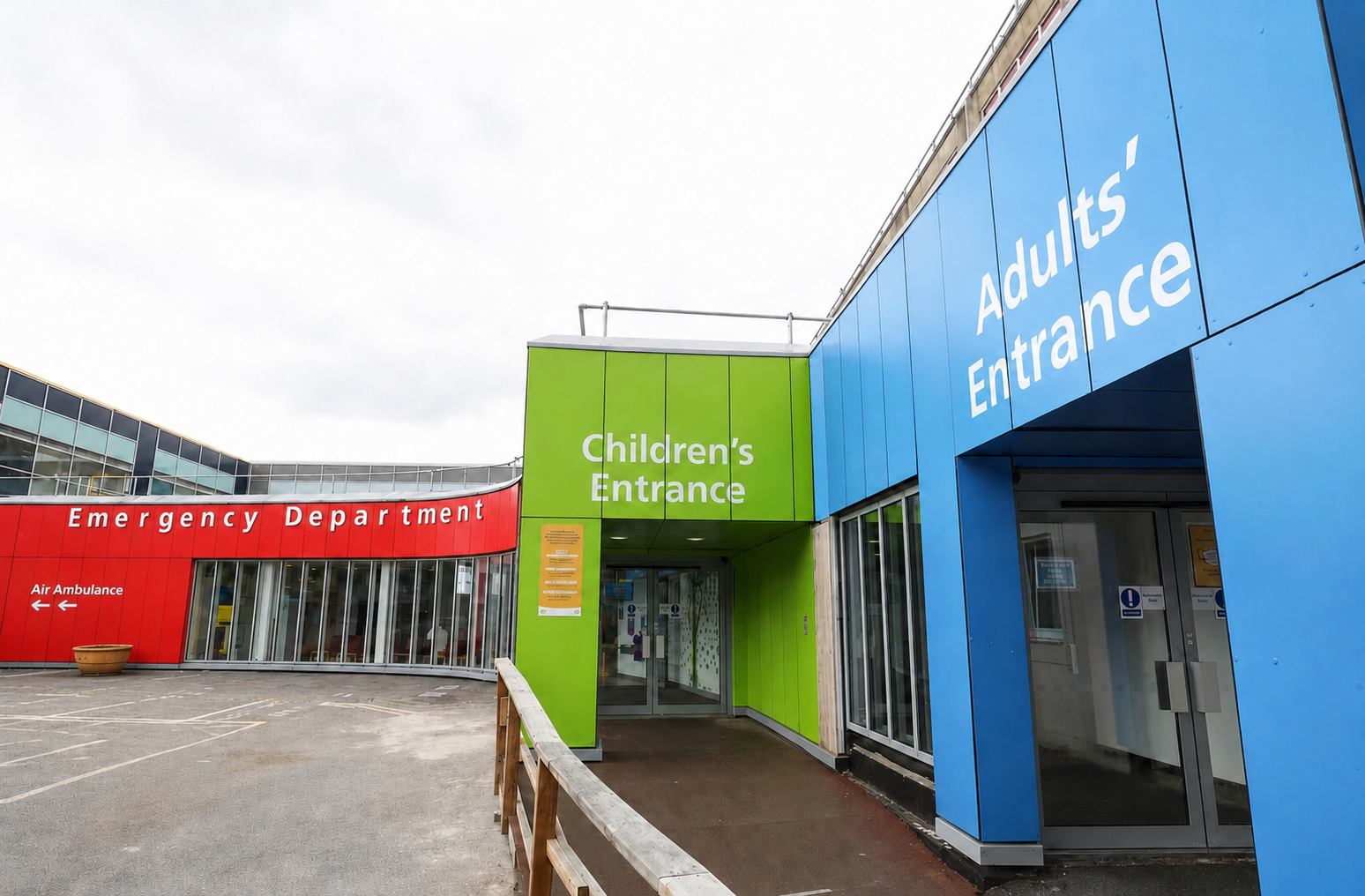
In September 2021, I joined No Limits’ youth work offer in emergency care. I was based at University Hospital Southampton, working there until January 2022. During my training, I also worked one shift at Winchester.
It was a short period, but intense. I enjoyed the work very much. It brought youth work into a clinical setting at a point when a young person’s life had become visible as an emergency, and it made some of the limits of that setting clearer to me.
The service sat within a wider political context. The Home Office had been funding local Violence Reduction Units as part of a national approach to preventing serious violence. In Hampshire and the Isle of Wight, £240,000 of that funding supported an expansion of No Limits’ Youth Navigators service across several hospitals, including Southampton, Winchester, Portsmouth, Basingstoke and the Isle of Wight. The Southampton emergency-department pilot itself had begun in 2020, funded locally by Southampton City Council’s Violence Reduction Unit and the Clinical Commissioning Group.
The funding frame could suggest that the work was only about violence. In practice, young people came to A&E for many reasons: violence and injury, self-harm, suicidal distress, eating disorders, family crisis, exploitation, mental ill health and situations that could not be separated neatly from the rest of their lives. A person could be recorded as a risk, a patient, a victim or a safeguarding concern. None of those descriptions was the whole account of who they were or what had brought them there.
The youth-worker role was to meet someone at that difficult point without treating the crisis as the whole story. The hospital gave a particular kind of access, but access is not the same as participation. Being present in A&E did not automatically mean that a young person trusted us, wanted to talk, or had the time and safety to make use of an offer of support. Relationship still had to be built in the moment, carefully and without forcing it.
One of the most important parts of the work was social prescribing. No Limits’ own 2020 to 2021 impact report describes it as a vital element of the emergency-department service. In practice, it meant helping a young person find routes into community support, interests, groups, activities or practical help while they were facing very long waits for formal mental-health provision.
It would be too neat to describe that as an immediate alternative. The short-term and community routes we could offer also had waiting lists. A young person who had reached A&E in crisis might be assessed, referred and then asked to wait again: for a group, an activity, a community service or another form of support. The fact that a route was described as short-term or low threshold did not mean that it was available when it was needed.
That did not make social prescribing meaningless. It could make a referral warmer, help someone understand what was available and make the period of waiting less isolating. But it did not shorten a waiting list, replace clinical care or resolve the conditions that had made somebody unsafe. It was a way of holding the gap, not closing it. Describing it otherwise risks using lower-threshold support to make a shortage of treatment and provision look acceptable.
I shared an office with CAMHS workers and learned a great deal about the process of assessing risk. Their role in A&E was clinical and necessarily bounded: to assess the immediate risk and decide whether CAMHS needed to continue working with the young person afterwards. That is important work, but it does not always create the conditions for a relationship.
Many young people already had a difficult relationship with CAMHS before they reached A&E. Some had been waiting a long time, felt forgotten, or expected to be judged. CAMHS therefore carried a reputation that could make relational work difficult from the outset. This was not a failure of individual workers, it was the consequence of a service under pressure, with thresholds, waiting lists and a tightly defined clinical remit.
Youth workers worked alongside CAMHS in a different but complementary way. We still held safeguarding responsibilities, but our immediate task was not to decide whether CAMHS would continue working with a young person. We were often well placed to build rapport, make room for a young person’s own account, and attend to the social and practical questions that might matter after discharge. The distinction mattered because a risk assessment, however necessary, could not by itself answer what a young person would return to: where they would sleep, who they could speak to, whether they had anything to do, or whether there was a place in their life where they felt known and wanted.
Working at the A&E door showed me how much can be asked of an emergency service. A crisis can be treated as a single event, but it is often the point at which longer pressures become impossible to ignore. Housing, family relationships, care experience, poverty, education, isolation and access to support may have been shaping the situation long before the hospital encounter.
By the time I left in January 2022, the funding had not been secured and the future of the project was uncertain. I had already begun to decide that I wanted to move into care and housing. The young people I met in this role made me want to work closer to the conditions people were living with, and with the possibility of making a more sustained difference than an emergency intervention could offer on its own.
That did not reduce the importance of the work at No Limits. The service was needed, and I learned a great deal from it. It clarified the value of youth work in a clinical setting, while also showing why emergency support, however skilful, cannot carry the weight of failures elsewhere.
The next part of this history begins in supported accommodation, where the questions that appeared at the A&E door became part of everyday life.
Earlier practice informing YAW · Southampton and Winchester · September 2021 to January 2022.
This post documents work undertaken before YAW was established, but which informs its present thinking and practice.
 YAW
YAW 