
Supported accommodation usually appears when a young person needs a new place to live and some help managing the move towards adult life.
They may be leaving foster care, a children’s home, a previous supported placement or a family home. They may have reached a point where a more independent arrangement is considered appropriate. Some sixteen and seventeen year-olds also arrive through homelessness services. The legal route into supported accommodation differs.
This post follows the regulated route for looked-after young people and care leavers aged sixteen and seventeen in England.
Who decides where somebody lives?
A local authority remains responsible for a young person who is looked after. It holds the care plan and makes the decision to seek a placement.
The social worker brings together information about the young person’s needs, relationships, education, health, safety and wishes. A manager may approve the decision. The Independent Reviewing Officer has a separate role in reviewing the care plan and challenging failures to carry out what has been agreed.
The young person should be involved in these decisions. They may be shown information about a possible house, visit it, meet staff or express a preference. The available options are shaped by what exists locally, what the authority can commission, the timing of the move and whether a provider accepts the referral.
A provider also has to decide whether it can offer a suitable place. Its statement of purpose should describe the service it provides and the needs it can meet. It should not accept a placement that falls outside that offer.
The referral
A referral is the point at which a young person’s life is translated into information for a provider.
It may include their care plan, risk information, health needs, education or employment, family contact, financial position, interests, current support, reasons for moving and the practical help they need. The provider considers whether the accommodation, staff team and other residents are appropriate.
This is often called matching. At its best, it gives proper attention to the person, the house and the support available. At its weakest, it becomes a search for an empty room.
The difference can be felt very quickly after a move.
What the local authority buys
The local authority commissions a placement from a provider. In simple terms, it pays a weekly fee for accommodation and an agreed level of support.
There is no national price for supported accommodation. Fees differ between local authorities, providers, property types and support levels. A self-contained flat with a small amount of visiting support costs differently from a shared house with staff present for long hours, waking nights or one-to-one work.
A public response from Coventry Council, for example, gave average weekly rates of £457 for solo accommodation and £490 for shared accommodation for sixteen and seventeen year-olds, including five support hours. That is an example of one local arrangement, not a national tariff.
The provider uses its income to run the service: property costs, furnishings, repairs, utilities, staff wages, sleep-ins or on-call arrangements, training, management, insurance, administration and, in private provision, profit. The regulations do not prescribe a staffing ratio or a single model for spending the fee.
This is why the cost of a placement does not tell us, by itself, how much direct time a young person will receive. The agreement needs to be read more closely.
The agreement around the placement
Several plans sit around a young person when they move in.
The local authority has the care plan. This sets out the wider purpose of the placement and the responsibilities it holds towards the young person.
There should also be a placement plan. It covers the day-to-day arrangements: where the young person is living, how their needs will be met, arrangements for contact with family and friends, education, health, money, transport, delegated decisions and the practical relationship between the local authority and the provider.
The provider has its own support plan. Under the 2023 regulations, this should be based on referral information, made in full consultation with the young person and reviewed as their circumstances change. The provider must give the young person an accessible written guide to the accommodation and support available.
Alongside these formal plans, a young person will usually encounter house rules, a licence agreement or occupancy agreement, arrangements around rent or charges, and expectations about visitors, overnight stays, curfews, smoking, substances, bedrooms and shared spaces. The detail varies between services.
Who is around?
The provider’s staffing arrangement should be set out before the service begins operating.
The regulations require a workforce plan covering the management and staffing structure, staff experience and qualifications, induction, core training, supervision and performance management. The plan should also explain how individual premises are overseen and how support is delivered: on site, through visiting or floating staff, through a host household, or through a combination of these arrangements.
There is no single national pattern. Some settings have staff in the building across long hours. Others offer planned sessions each week, with an on-call number outside those times. Supported lodgings involves a host in their own home. A young person’s referral and the local authority’s commissioning arrangement should identify the level of support expected.
The people working in a service are part of its structure. A provider may have support workers, senior staff, managers, an on-call system, agency workers, hosts, maintenance staff and external specialists. The important practical questions are simple: who is there, when, what can they help with, and who takes responsibility when something changes?
After the move
A move into supported accommodation does not end the local authority’s responsibility.
For a looked-after young person, the local authority must arrange a visit within the first week of a placement. During the first year, visits must take place at intervals of no more than six weeks. After that, the maximum interval can become three months where the placement is intended to last until the young person turns eighteen. The visiting worker should speak with the young person privately unless there is a clear reason not to.
The care plan is reviewed through the looked-after-child review process. The first review happens within twenty working days of a young person becoming looked after; the second follows within three months; later reviews take place at least every six months. A significant change to the care plan, including a move, should be considered through that process wherever possible.
At sixteen, care-leaving planning should be underway. A young person who is eligible for leaving-care support should have an assessment of their needs, a pathway plan and a personal adviser. The pathway plan covers accommodation, education or employment, money, health, relationships, identity, practical skills and the support needed after leaving care.
It should be reviewed at least every six months and whenever circumstances require it. The role of the personal adviser continues until at least twenty-one, with support available up to twenty-five for care leavers who want it.
A young person may therefore have a social worker, a personal adviser, an Independent Reviewing Officer, provider staff and other professionals around them at the same time. Their roles are different. The local authority remains responsible for the care plan and statutory duties; the provider delivers the accommodation and support it has agreed to provide.
What a young person enters
From outside, supported accommodation can look like a house with staff.
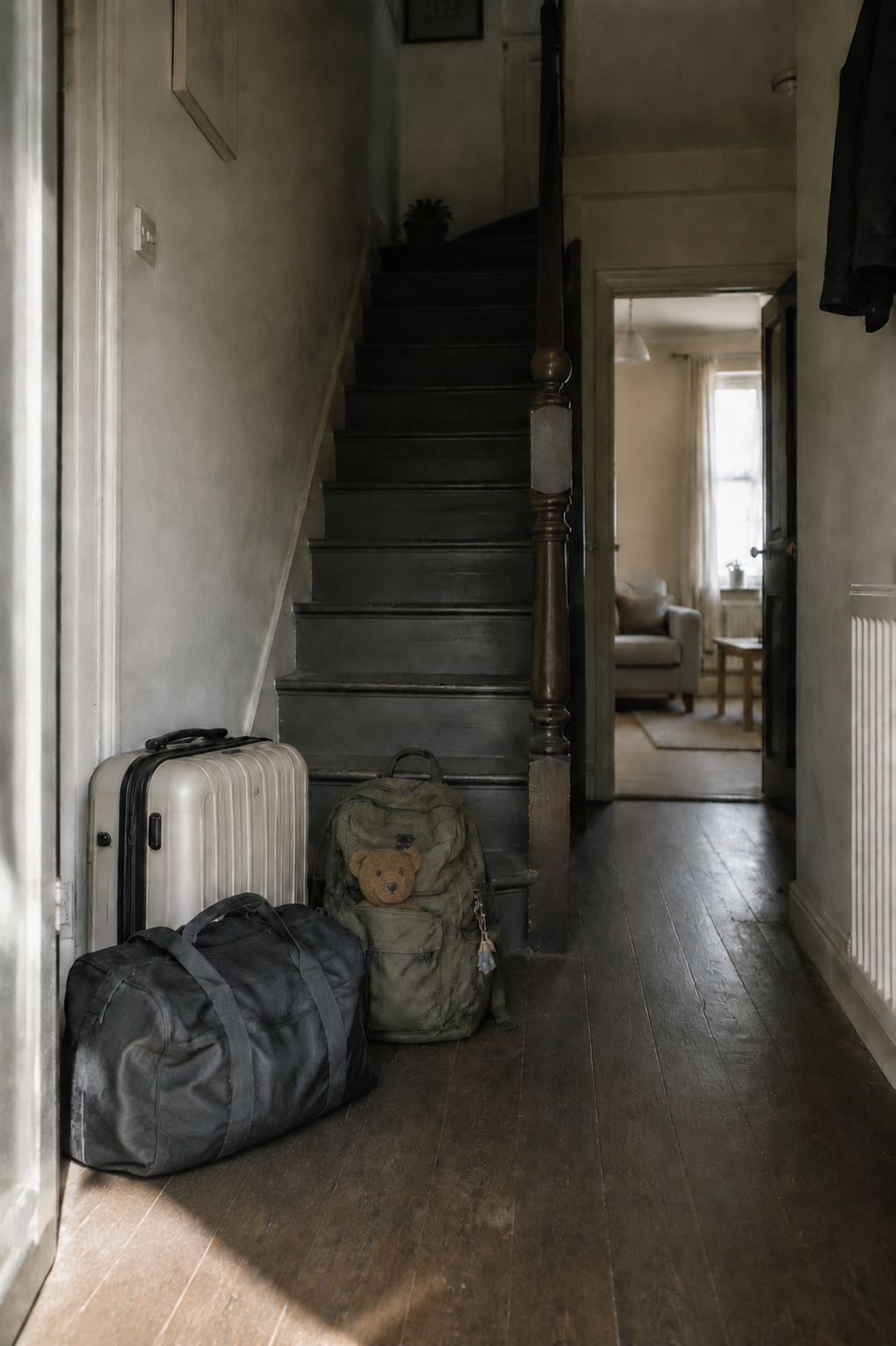
In practice, it is a chain of decisions, plans, contracts, professional roles and public money. A young person enters that chain at a particular moment in their life. They may arrive with a few bags, a care plan written elsewhere, people they miss, things they want to hold on to, and a strong view about the kind of help they do or do not want.
The quality of the placement begins with how those things are understood.
Sources
- HM Government, The Care Planning, Placement and Case Review (England) Regulations 2010.
- HM Government, The Supported Accommodation (England) Regulations 2023.
- Department for Education, Guide to the Supported Accommodation Regulations, including Quality Standards, 2023.
- GOV.UK, Leaving foster or local authority care.
- Coventry City Council, FOI response on supported-accommodation costs and support.
Research informing YAW · England · 2023 to present.
 YAW
YAW 